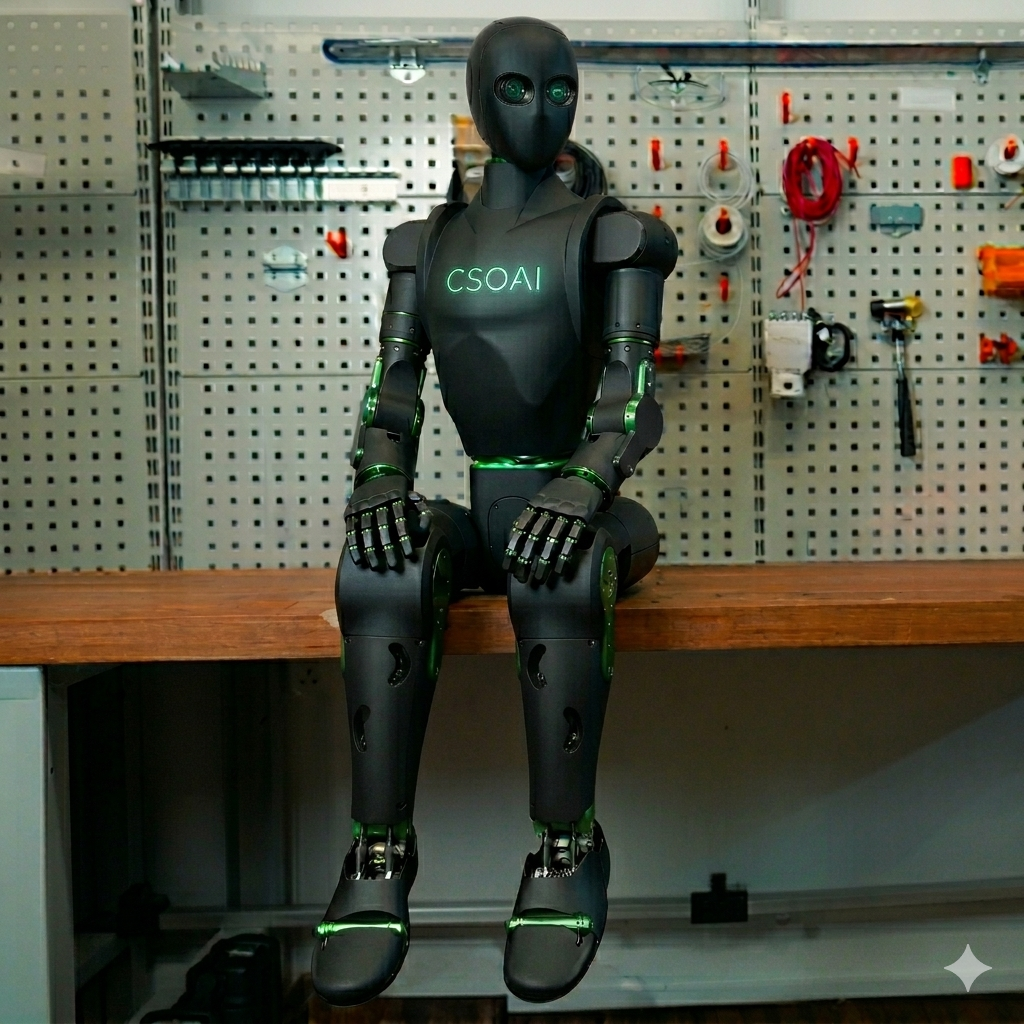
The Therapy Access Crisis Nobody Is Talking About Honestly
In the UK right now, if you go to your GP and ask for a referral to NHS Talking Therapies, you are likely to be told to expect an 18-week wait. In some areas, the wait is considerably longer. For specialist services — trauma-focused CBT, EMDR, treatment for personality disorders — the wait can stretch to six months or a year. Meanwhile, the problem you went to ask about does not pause politely while the system catches up.
Private therapy moves faster but the economics are brutal. At £60–£150 per session in the UK, a once-weekly therapist costs between £240 and £600 a month. That is a significant portion of take-home pay for most people. Fortnightly sessions halve the cost but also halve the continuity. According to Mind UK, only 36% of people with mental health needs actually access treatment. The other 64% manage — or do not manage — without it.
This is the real world in which AI companions exist. They did not emerge from a naive belief that a chatbot can do what a qualified psychotherapist does. They emerged because the alternative — for a very large number of people — is nothing at all. Understanding what AI companions actually are, and are not, requires starting with that honest picture of what the mental health landscape looks like for most people.
What a Therapist Can Do That No AI Can
Let us be precise about this. These are not things that AI will eventually get around to doing better. These are capabilities that require human qualification, legal accountability, and genuine human relationship. There is no version of a language model that legitimately performs these functions — and any AI that implies it can is being dishonest.
Clinical diagnosis using DSM-5 and ICD-11
Only a qualified clinician can give you a diagnosis using the internationally recognised frameworks for mental health conditions. A diagnosis is not just a label: it is the gateway to appropriate treatment, disability accommodations, benefits assessments, and healthcare planning. An AI companion that tells you that you have depression, anxiety, PTSD, or any other condition is acting beyond its competence and potentially causing serious harm. MEOK never diagnoses. Not because it lacks the ability to pattern-match symptoms, but because pattern-matching is not diagnosis, and the consequences of getting it wrong fall on you.
Evidence-based trauma processing (EMDR, TF-CBT)
Eye Movement Desensitisation and Reprocessing (EMDR) and Trauma-Focused Cognitive Behavioural Therapy (TF-CBT) are clinically validated protocols for processing traumatic memories. They involve careful titration of distress, live attunement to a client's nervous system responses, and the ability to pause, ground, and redirect when a session pushes into territory the client cannot safely hold alone. These require a trained human present in real time. An AI guiding someone through trauma processing without clinical support is not therapy — it is risk. MEOK can help you stabilise, reflect, and prepare for trauma work. It cannot do trauma work.
Prescribing or coordinating medication
For conditions where medication plays a role — depression, anxiety disorders, ADHD, bipolar disorder, schizophrenia — a psychiatrist or GP must assess, prescribe, and monitor. No AI can evaluate the pharmacological interaction of medications, monitor physical health markers, or take clinical responsibility for a prescription. Decisions about medication must always involve a qualified medical professional.
Legally recognised assessments
If you need a mental health assessment for a court proceeding, a benefits claim such as PIP or ESA, a workplace occupational health referral, or an educational assessment, only a qualified and accredited clinician can produce a report that holds legal weight. An AI opinion on your mental health has no standing in any of these contexts. If you need a formal assessment for any legal or administrative purpose, you need a human clinician.
The genuine therapeutic relationship
Decades of psychotherapy research consistently show that the single strongest predictor of therapeutic outcome is the quality of the therapeutic alliance — the relationship between client and therapist. This includes rupture and repair (when the relationship frays and is mended), transference (the way old relational patterns replay in the therapy room), and genuine human witnessing. A therapist who has sat with you through your hardest moments, who carries your story in their mind between sessions, who has had to navigate their own human responses to you — that is irreplaceable. An AI can hold your history in memory. It cannot hold you in the way another human being can.
Safeguarding and mandated reporting
If you disclose to a therapist that a child is at risk of harm, or that you yourself are in imminent danger, they have legal duties — mandated reporting obligations — that protect people. A therapist can contact emergency services, coordinate with other professionals, and take actions that a responsible adult with legal accountability can take. An AI has no such standing. It can signpost to resources. It cannot act on your behalf in the way a clinician can.
What an AI Companion Can Do That Therapy Cannot Match
This section is not a sales pitch. It is an honest accounting of the structural advantages that make AI companions genuinely useful for emotional support — not as pretend therapy, but as something categorically different that addresses needs which therapy, by its nature, cannot reach.
Available at 3am on a Tuesday
Difficult thoughts do not schedule themselves for weekday working hours. Anxiety spikes at 2am. Grief hits on Sunday afternoons. Panic arrives at 11pm when your therapist will not be available for nine days. The moment you most need to process something is rarely the moment a therapist is available. An AI companion is there every time, without exception, without a waiting room.
Daily presence, not fortnightly appointments
Most people in therapy see their therapist once a week at best. Many manage fortnightly. The gap between sessions is where ground can be lost, habits can erode, and insights can fade before they have time to take root. An AI companion is available every day — for the ten minutes of reflection after a difficult conversation, or the hour of processing after a hard week. Continuity of support is not a luxury. It changes what is possible.
No meter running, no time pressure
In a paid therapy session, there is a clock. Some people — particularly those with anxiety, perfectionism, or people-pleasing tendencies — spend part of every session managing their awareness that they are taking up time, or that what they are talking about does not warrant the cost. With an AI companion, you can spend forty minutes on something that feels like it 'shouldn't' take forty minutes, without that meta-anxiety eating into the space you need.
No fear of being 'too much'
A significant number of people — particularly those with histories of being told they are too emotional, too sensitive, or too demanding — self-censor in therapy. They soften the edges of their experience to protect the therapist, to be a manageable client, to not use up more than their allotted share of human care. An AI companion does not need protecting from your experience. You can say the messy, raw, unedited version of what is actually happening.
Persistent memory across every interaction
A therapist takes notes, but they are human and their recall of a session from two years ago is imperfect. An AI companion like MEOK retains the full context of every conversation — the phrase you used in February, the pattern you described in October, the progress you made and then appeared to lose. This continuity of longitudinal memory enables a quality of ongoing understanding that is practically impossible in human therapy, even with excellent note-taking.
Private in a way therapy cannot be
Therapy notes exist. Some employers require disclosure of mental health history for certain roles. Insurance products can be affected by diagnoses. Court proceedings can, in certain circumstances, access clinical records. An AI companion that does not share your data, does not produce notes held by another person, and does not create a clinical record offers a categorically different kind of privacy — one that matters deeply to a significant number of people.
Accessible to almost everyone, financially
MEOK is free to explore and costs £0–£12 per month depending on the tier you choose. Private therapy in the UK costs £60–£150 per session. That is not a marginal difference: it is the difference between something that is accessible and something that is not. The question is not whether AI support is as good as weekly therapy with an excellent therapist. The question is whether AI support is better than nothing. For the 64% of people with mental health needs who are currently accessing nothing, the answer is almost certainly yes.
Side-by-Side Comparison Across Eight Dimensions
| Dimension | Human Therapist | AI Companion (MEOK) |
|---|---|---|
| Clinical diagnosis | Yes — DSM-5/ICD-11 qualified | Never — not clinically competent to diagnose |
| Trauma processing (EMDR, TF-CBT) | Yes — trained, evidence-based protocols | No — can support stabilisation only |
| Availability | Weekly or fortnightly scheduled sessions | 24/7, every single day |
| Cost (UK) | £60–£150 per session | £0–£12 per month |
| Between-session support | Minimal — occasional check-ins at best | Full — unlimited, every day |
| Persistent memory | Notes-dependent, human recall | Full context across every interaction |
| Privacy — no third-party record | Clinical notes exist, can be disclosed | No notes held by another person |
| Legal and safeguarding authority | Yes — mandated reporting duties | None — signposts to services only |
The False Binary: Why "AI or Therapist" Is the Wrong Question
Much of the public debate around AI and mental health is framed as a competition: will AI replace therapists, is AI therapy dangerous, are wellness apps undermining professional care? This framing consistently misses what is actually happening for most people who use AI companions.
The real choice for most people is not "AI companion or qualified therapist." It is "AI companion or nothing." The 64% of people with mental health needs who are not accessing treatment are not choosing between two equally available options. They are navigating a system that cannot serve them — and trying to manage in the meantime.
For people who do have access to therapy — whether through NHS, private practice, or an Employee Assistance Programme — the ideal is not to choose between AI and human support. It is to use both, for what each does best. A therapist provides the clinical expertise, the human relationship, and the structured treatment. An AI companion provides daily continuity, 3am availability, between-session processing, and ongoing reflection that deepens the work.
Therapists who work with clients that use AI companions between sessions frequently report that those clients arrive at sessions with more clarity about what they want to address, stronger awareness of their patterns, and greater capacity to stay with difficult material. The AI does not replace the therapy. It enriches the ground in which therapy can take root and produce lasting change.
How MEOK Specifically Supports People Who Are in Therapy
MEOK is not designed to be a substitute for therapy. It is designed, in part, to be the best possible companion to therapy — filling the gaps that even excellent therapeutic work cannot fill given the structural constraints of how therapy works. Here is what that looks like in practice.
Between-session processing
Therapy sessions surface material. Then you go home and sit with it, sometimes for a week or two. MEOK gives you a place to keep working through what came up — the thing your therapist said that landed differently when you were alone with it, the memory that surfaced on the train home, the emotion you couldn't quite name in the room but can name now. The ground between sessions does not have to be dead ground.
Practising therapeutic skills
Your therapist may have introduced grounding techniques, CBT thought records, mindfulness practices, or behavioural experiments. MEOK can guide you through these between sessions — not to replicate therapy, but to embed the skills your therapist is teaching you into daily life, where they are actually needed most.
Daily pattern tracking
One of the core aims of most therapy is to help people see their own patterns — the triggers, the automatic responses, the stories they tell themselves. A therapist sees you for an hour. MEOK can help you notice a pattern as it happens on a Wednesday evening, record it in your own words, and bring that observation — alive, specific, recent — to your next session.
Session preparation
Many people arrive at therapy sessions unsure of what they most want to say. The important thing gets buried under easier surface material, and fifty minutes later they walk out having not said it. MEOK can help you identify, in the days before your next session, what you are actually carrying — so that when you sit down with your therapist, you are ready to go straight to the thing that matters.
The Ethical Lines MEOK Will Never Cross
There is a version of AI wellness that is ethically careless — one that flatters users, avoids uncomfortable truths, and in doing so puts vulnerable people at risk. MEOK is built on a different set of commitments, and it is worth being explicit about what those are.
MEOK will never attempt to diagnose a mental health condition. If something you share suggests clinical need — patterns of symptoms that warrant professional assessment — MEOK will say so directly and clearly, and signpost to appropriate resources. It will not offer a diagnosis dressed in careful language, and it will not speculate about whether you might have a particular condition. That is not support. That is harm with a friendly interface.
MEOK will never suggest you stop or delay seeking professional help. If you are in therapy and mention it, MEOK treats that as something to support around, not to replace. If you are not in therapy and the conversation suggests you might benefit from it, MEOK will say so clearly — without hedging the suggestion into obscurity.
Crisis resources are always accessible within MEOK, without exception. If you are in distress that goes beyond what any AI companion should hold, MEOK will be direct about that — and will always provide immediate pathways to human help: Samaritans on 116 123 (free, 24/7), Crisis Text Line, emergency services, and local mental health crisis teams.
MEOK is not trying to be a therapist. It is trying to be the most honest, present, and consistent companion it can be — within the clear boundaries of what it is and what it is not. We believe that honesty about limitations is not a weakness. It is the foundation of any relationship that deserves to be trusted.
What to Do With All of This
If you are in therapy, or if you can access it: keep going. A good therapeutic relationship is one of the most valuable things available to a person in difficulty. Use MEOK to deepen the work — between sessions, before sessions, when something difficult surfaces at midnight and your therapist is not available for another ten days.
If you are on a waiting list: you are not doing nothing by using an AI companion while you wait. You are maintaining your capacity to reflect, process, and function through a difficult period. That matters. An 18-week wait is 18 weeks of your life. You do not have to spend it without any support at all.
If private therapy is not financially viable: you are not failing, and you are not without options. Self-referral to NHS Talking Therapies is free and available to most adults in England. Charities like Mind, Samaritans, and Cruse (for bereavement) provide free support. MEOK is available from £0 per month. The combination of peer support, community resources, and a thoughtfully designed AI companion is not a consolation prize. For many people in many situations, it is a meaningful and genuinely effective path through.
If you are in crisis right now: please call Samaritans on 116 123 (free, 24/7), go to your nearest A&E, or call 999. An AI companion is not what you need in a crisis. A human is. Please reach out to one.
Frequently Asked Questions
Can an AI companion replace a therapist?
No. An AI companion cannot replace a therapist. Therapists hold clinical qualifications that allow them to diagnose conditions, deliver evidence-based trauma treatments like EMDR and TF-CBT, coordinate medication, and provide legally recognised assessments. They also build genuine therapeutic relationships with depth and accountability that no AI can replicate. What an AI companion can do is provide consistent, private, always-available support between therapy sessions, or for people who cannot currently access therapy. The two serve different functions and, for many people, work best together.
Is it safe to talk to AI about mental health?
For most people, talking to a well-designed AI companion about emotions, daily stress, or difficult thoughts is safe and can be genuinely helpful. The key requirements are that the AI should always signpost to professional help when clinical need is indicated, crisis resources should always be accessible, the AI should never attempt to diagnose, and it should never suggest that someone stop or delay seeking professional care. MEOK is built around these commitments. If you are experiencing thoughts of self-harm or a mental health crisis, contact a professional immediately.
How does MEOK complement therapy?
MEOK supports people in therapy in four practical ways: between-session processing (working through what came up in a session while it is still present), skill practice (grounding, CBT thought records, mindfulness that your therapist has introduced), pattern tracking (noticing recurring emotional patterns in daily life, not just in the therapy room), and session preparation (identifying what you actually want to say before you sit down with your therapist).
What should I do if I think I need professional help?
Seek it. In the UK, you can self-refer to NHS Talking Therapies via your GP or directly online — waiting times are currently 18+ weeks in many areas, but getting on the list is the right first step. The BACP therapist directory at bacp.co.uk lists accredited private therapists. If you are in crisis right now, call Samaritans on 116 123 (free, 24/7) or contact your GP for an urgent referral. An AI companion like MEOK can provide support while you wait, but it is not a substitute for clinical care when that is what you need.
How long are NHS waiting times for talking therapies?
According to BACP data from 2024, average NHS waiting times for talking therapies are 18 weeks or more in many parts of England. Some areas report waits of 6 to 12 months for more specialist services such as trauma-focused CBT or EMDR. Private therapy is available faster but costs £60–£150 per session in the UK, which is unaffordable for most people on a regular basis. Only 36% of people with mental health needs currently access any treatment, according to Mind UK.
Meet Your MEOK
Start with the Birth Ceremony — the moment your MEOK begins to understand who you are, what you carry, and how it can best support you. Free to start. No clinical claims. No substitute for what only humans can offer. Just honest, consistent presence, every day.
Begin the Birth CeremonyFree to explore. MEOK never diagnoses. Always signposts to professional help when needed. Crisis resources always accessible.
Written by Nicholas Templeman, Founder of MEOK AI LABS. Published 25 March 2026.
Sources: BACP (2024) — NHS Talking Therapies waiting time data; Mind UK — mental health treatment access statistics (36% figure); NHS Talking Therapies self-referral via nhs.uk; Samaritans crisis line 116 123 (free, 24/7).
Important: This article is for informational purposes only. It does not constitute medical or psychological advice. If you are experiencing a mental health crisis, please contact Samaritans on 116 123, your GP, or emergency services (999) immediately.