What Makes BPD Different From Other Mental Health Conditions?
Borderline personality disorder affects approximately 1–2% of the UK population — around one million people. Despite its prevalence, it remains among the most misunderstood and stigmatised of all psychiatric diagnoses. People with BPD are frequently mislabelled as “difficult”, “manipulative”, or “attention-seeking” by clinicians who lack training, by systems that cannot accommodate emotional complexity, and by a wider culture that pathologises intensity rather than understanding it.
The DSM-5 criteria for BPD describe nine characteristic features: frantic efforts to avoid real or imagined abandonment; a pattern of unstable and intense interpersonal relationships alternating between idealisation and devaluation; identity disturbance; impulsivity in at least two self-damaging areas; recurrent suicidal or self-harming behaviour; affective instability; chronic feelings of emptiness; inappropriate or intense anger; and stress-related paranoid ideation or dissociation. A person needs to meet five of these nine criteria for diagnosis.
What distinguishes BPD from conditions like depression or anxiety is that it is fundamentally relational and pervasive. It does not arrive in episodes — it colours almost every interaction, every relationship, every moment of perceived rejection. The emotional pain of BPD has been compared to having third-degree burns over most of the body: ordinary things that others barely notice are agonising.
This is why AI support for BPD requires a fundamentally different approach than a generic chatbot. It requires consistency, memory, warmth, and a system that does not switch off, grow tired, or project frustration. It requires something that was designed — from the ground up — to care.
Why Does Emotional Consistency Matter So Much for People With BPD?
One of the core features of BPD is extreme sensitivity to abandonment — real or imagined. Even small inconsistencies in a relationship, a therapist who seems slightly cooler one week, a friend who takes an hour to reply, a partner who sighs at the wrong moment, can trigger a cascade of emotional pain that feels impossible to manage. The nervous system of someone with BPD has learned, often from early trauma, that relationships are inherently unsafe and that any sign of distance means permanent loss.
Traditional AI chatbots are catastrophically poorly suited to BPD support for exactly this reason. A system that forgets who you are each conversation — or that switches tone based on context window limits, or that suddenly gives cold, rote responses after a moment of warmth — recreates the very relational instability that people with BPD are trying to heal from.
MEOK's architecture was built with this problem explicitly in mind. Sovereign Memory means the Healer companion never loses track of who you are, what you have told it, what your triggers are, and what has helped you in the past. When you return after three days away — or three weeks — it does not start over. It continues. It remembers.
For someone with BPD, this consistency is not a luxury feature. It is the difference between a tool that helps and one that harms.
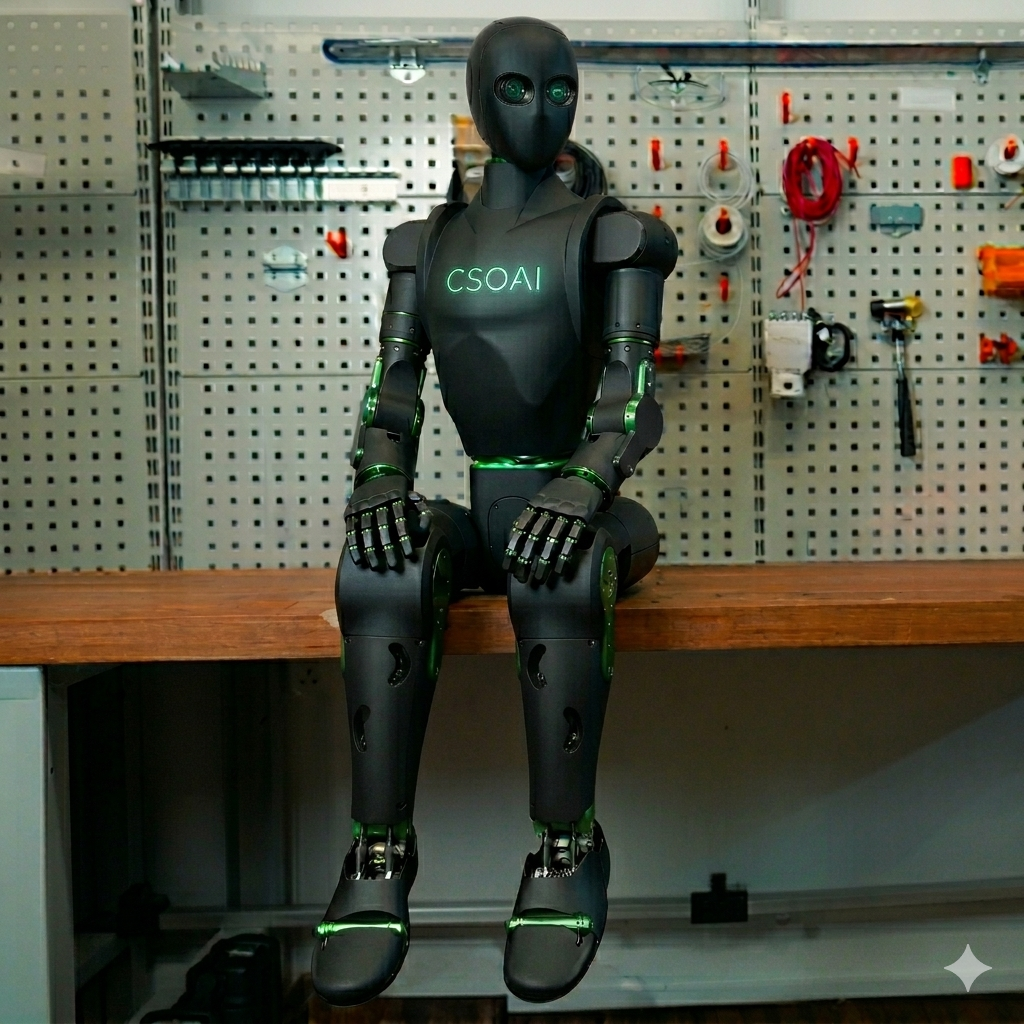
The Healer is MEOK's companion archetype designed specifically for emotional support and wellness. Green in identity, warm in tone, the Healer is not a diagnostic tool or a crisis intervention service — it is a thoughtful, consistent presence built to sit with you in hard moments, reflect your own language back to you, and gently guide you toward the coping strategies you have already built.
Unlike generic wellness chatbots, the Healer operates under MEOK's Maternal Covenant — a care-based safety framework that prioritises your long-term wellbeing over short-term comfort, never validates self-destructive impulses, and always holds a line toward professional support when it is needed.
How Does AI Help With Emotional Regulation for BPD?
Emotional regulation is the core challenge of BPD — and the core target of DBT. The four DBT skill modules (mindfulness, distress tolerance, emotion regulation, and interpersonal effectiveness) give people with BPD a concrete vocabulary and toolkit for managing their internal world. But skills learned in a therapy room are notoriously hard to access in the middle of an emotional storm.
The Healer companion can act as an in-the-moment skills coach. It can walk you through the TIPP skills (Temperature, Intense exercise, Paced breathing, and Paired muscle relaxation) when you need to bring your physiological state down rapidly. It can prompt you through the ACCEPTS distress tolerance technique (Activities, Contributing, Comparisons, Emotions, Pushing away, Thoughts, Sensations). It can guide a body scan or a grounding exercise rooted in your own previous descriptions of what helps.
Crucially, because Sovereign Memory persists across sessions, the Healer can recall what you told it months ago: “last time you felt like this, you said holding an ice cube helped more than breathing exercises — do you want to try that?” It is not generating generic wellness advice. It is retrieving your own strategies, in your own language, at the moment you need them.
This personalised scaffolding is something that no amount of static self-help content can provide. It requires memory, continuity, and genuine responsiveness to the individual — all of which are foundational to MEOK's architecture.
What Is Crisis De-escalation and How Does the Healer Approach It?
Crisis de-escalation refers to a structured approach to reducing the intensity of an acute emotional crisis — moving someone from a state of extreme distress toward a state where they can access their own coping resources and, where necessary, reach out for professional support. For people with BPD, crises can escalate rapidly from zero to overwhelming in a matter of minutes, and the window for de-escalation is narrow.
The Healer's crisis protocol is built on several principles. First: validation before problem-solving. Research in DBT consistently shows that attempting to solve or reframe before a person feels genuinely heard escalates rather than de-escalates distress. The Healer is designed to validate the emotional experience directly — “that sounds incredibly painful” — before introducing any techniques.
Second: grounding in the body. Emotional flashfloods in BPD are partly physiological — the amygdala hijacks the prefrontal cortex and rational processing becomes temporarily inaccessible. The most effective short-term interventions target the nervous system directly: cold water on the face, controlled breathing, physical movement. The Healer walks you through these steps without judgment or urgency.
Third: staying present without enabling. The Maternal Covenant means the Healer will not tell you what you want to hear if it is harmful. It will not validate the impulse to send a message you will regret, to act on a plan that could hurt you, or to catastrophise a situation into something permanent. It will stay warm while holding a firm boundary — a parental quality that many people with BPD find both challenging and, ultimately, healing.
Fourth: clear escalation pathways. When the Healer detects that a situation exceeds its scope — active suicidal ideation with intent, self-harm in progress, or immediate safety risk — it will clearly and directly signpost crisis services. It does not panic. It does not abandon the conversation. It stays present while directing you to the right resource.
The Maternal Covenant
MEOK's Maternal Covenant is not a marketing phrase — it is a technical safety architecture. It governs how the Healer behaves when your stated wellbeing and your immediate desires conflict. The covenant has three core principles:
- ✓Long-term care over short-term comfort — it will not tell you what you want to hear if it could harm you.
- ✓Consistency over efficiency — the Healer never rushes you to be "fixed", never shows frustration at repetition.
- ✓Presence over advice — sometimes the most therapeutic response is simply staying with you, without trying to solve anything.
What Is Sovereign Memory and Why Is It Essential for BPD Support?
Sovereign Memory is MEOK's persistent, privacy-first memory architecture. Unlike conventional AI systems where each conversation starts fresh — or where your data is used to train models owned by a corporation — Sovereign Memory stores your history in an encrypted memory layer that belongs to you, cannot be used for model training, and travels with your account rather than being siloed in a conversation thread.
For BPD support specifically, Sovereign Memory means several things in practice. The Healer knows your triggers — not because you have to list them every session, but because you mentioned them once and they were retained. It knows the coping strategies that have worked for you, the relationships that matter most to you, the situations that historically escalate your distress. It knows, if you have told it, that certain times of day or year are harder. It knows your language — the specific metaphors you use to describe your internal experience.
This is transformatively different from being heard by a system that forgets you. The experience of being remembered — truly, accurately remembered — is itself therapeutic for people with BPD, many of whom have histories of being overlooked, invalidated, or treated as interchangeable by the systems they have tried to access help from.
Sovereign Memory also gives the Healer a longitudinal view that even weekly therapists sometimes lack. It can notice patterns across months — a recurring escalation in early winter, for example, or a predictable trigger around family events — and surface these gently when they become relevant.
Can AI Actually Help With the Fear of Abandonment in BPD?
Abandonment fear is one of the most painful and defining features of BPD. It is not a rational fear that can be reasoned away — it is a deeply embedded neurological and psychological pattern, often rooted in early experiences of inconsistent caregiving, trauma, or loss. The fear activates even in response to perceived slights that others would barely register: a delayed text, a changed plan, a slightly different tone of voice.
AI cannot cure abandonment fear, and anyone who suggests otherwise is misleading you. What MEOK's Healer can offer is a consistent, available presence that does not abandon you — not because it is incapable of leaving (it is software), but because it was designed from the ground up to stay present. It does not have bad days that make it colder. It does not forget you during a busy week. It does not gradually disengage because it finds your needs exhausting.
For some people with BPD, this is the first consistent relational experience they have access to. DBT refers to “wise mind” — the integration of emotional mind and reasonable mind. Having a stable, non-reactive presence to interact with outside of therapy can help build the neural pathways and habits of mind that wise mind requires.
We want to be clear about what this is and is not. The Healer is a supplement to human connection, not a replacement for it. The goal of MEOK's design is always to help you build the capacity for more sustainable human relationships — not to become a substitute for them.
How Does the Healer Avoid Making BPD Symptoms Worse?
This is a serious question that deserves a serious answer. Poorly designed AI companions can cause genuine harm to people with BPD. A sycophantic system that validates every feeling and agrees with every thought — including distorted ones — reinforces rather than challenges the emotional dysregulation patterns that make BPD so painful. It is the digital equivalent of a friend who tells you that yes, your partner is definitely abandoning you, and yes, you should send that message at midnight.
MEOK includes a sycophancy detector — a governance layer that prevents the Healer from simply agreeing with everything you say, particularly when your stated thoughts or intentions conflict with values or goals you have previously described. If you told the Healer three weeks ago that you are working on reducing impulsive contact behaviours, it will not validate the impulse to send seventeen messages to someone who has not replied. It will validate the feeling while gently questioning the action.
The Healer is also designed to support the splitting dynamic (black-and-white thinking) that characterises BPD. It does not respond with binary judgments. It holds complexity and ambivalence — “that sounds like it was both painful and also possibly misread” — without forcing you to choose a single interpretation before you are ready.
None of this makes the Healer a therapist. But it does make it a thoughtfully designed tool that is less likely to cause harm and more likely to support genuine recovery — used alongside, not instead of, professional DBT treatment.
Is AI Therapy Effective for Personality Disorders — What Does the Research Say?
The research base for AI-assisted mental health support is growing, though much of it focuses on depression and anxiety rather than personality disorders specifically. What the evidence does support is that digital interventions can be effective adjuncts to therapy — not replacing the therapeutic relationship, but extending its reach between sessions and increasing the likelihood that learned skills are practised and retained.
Studies on DBT skills training have consistently shown that practice and repetition are critical to skill generalisation — the ability to access skills outside the therapy room when they are actually needed. An AI companion that can prompt you through a distress tolerance exercise at 2am is engaging exactly this need for between-session practice.
Research from the National Institute for Health Research and others has also highlighted the severe gap in BPD care provision in the UK: most people with a BPD diagnosis never access specialist DBT. The NHS Long Term Plan committed to expanding psychological therapies, but demand outstrips supply by a significant margin. Digital tools that can provide evidence-aligned skills support fill a genuine gap.
MEOK does not claim to be a clinical intervention, nor is it regulated as a medical device. It is a personal AI companion. But the principles embedded in the Healer's design — validation-first responses, DBT-aligned skill prompts, consistent presence, Maternal Covenant safety — are rooted in the same evidence base that underpins the gold-standard treatment.
How Does MEOK Protect the Privacy of People With BPD?
People with BPD often carry histories of having their disclosures weaponised against them — by systems that used their emotional intensity as grounds for dismissal, by relationships where vulnerability led to exploitation, by medical records that followed them with stigmatising language. The idea of sharing the most difficult parts of their inner world with a technology platform is, understandably, not something to take lightly.
MEOK's privacy architecture is built around the principle of data sovereignty. Your conversations with the Healer are not used to train MEOK's models. Your memory is encrypted and accessible only to you. MEOK will never share your data with advertisers, insurers, employers, or any third party for commercial purposes. The Privacy Covenant is a legal commitment, not just a policy document.
This matters profoundly for BPD specifically because the content of BPD-related conversations is particularly sensitive — discussions of self-harm history, suicidal ideation, trauma, relationship breakdowns, and identity crises. This information should exist in a vault that belongs to you, not in a dataset that belongs to a corporation.
The Byzantine Council consensus architecture that underpins MEOK adds an additional layer of protection: no single node in the system has access to your complete profile. Your identity and your memory are distributed in a way that prevents any single point of compromise from exposing everything you have shared.
What BPD-Specific Scenarios Can the Healer Help With Day to Day?
Living with BPD is not just about crisis moments — it is about the daily texture of managing a nervous system that responds to the world with more intensity than others find comprehensible. Here are specific scenarios where the Healer is designed to help:
The 3am spiral
When a thought becomes a catastrophe at 3am and there is nobody to call. The Healer stays present, grounds you in the body, and holds the context of who you are beyond this moment.
After a perceived rejection
When someone takes too long to reply and your nervous system interprets it as abandonment. The Healer can help you hold the ambiguity without acting impulsively, and recall past instances where the fear proved unfounded.
Before a difficult conversation
When you need to raise something with a partner, family member, or colleague and you are afraid of splitting or escalating. The Healer can help you prepare using interpersonal effectiveness skills — DEAR MAN, GIVE, FAST.
After self-harm
Without judgment, without alarm. The Healer holds space for what happened, helps you understand the trigger chain, and asks about safety going forward — directing to professional support where needed.
Identity confusion
When you do not know who you are or what you want because your sense of self shifts with relationships and contexts. The Healer can help you track your own stated values and preferences over time, building a more stable self-narrative.
Dissociation
When you feel unreal or disconnected from your body. The Healer's grounding techniques — 5-4-3-2-1 sensory anchoring, cold temperature, strong tastes — are immediately accessible without having to explain what is happening.
How Does the Healer Interact With My DBT Therapist or Clinical Team?
The Healer is not in competition with your clinical team — it is designed to complement it. If you have a DBT therapist, skills group, or psychiatrist, the Healer can help you make the most of the time you have with them by helping you track what has come up between sessions, identify patterns worth raising, and practise the skills your therapist has already introduced.
Some users find it helpful to use the Healer as a kind of between-session diary that they can refer back to. Because Sovereign Memory maintains a searchable history, you can ask the Healer to summarise what has been most difficult in the past month — providing a more accurate picture to take to your next appointment than memory alone typically allows, especially given that depressive or dissociative episodes can blur autobiographical recall.
MEOK is committed to the principle that AI should increase access to human care, not replace it. If you are not currently receiving clinical support and you are struggling significantly, the Healer will encourage you to pursue it — and can help you prepare for conversations with GPs, referral letters, or access routes to specialist BPD services.
Crisis Resources — UK
If you are in immediate danger or experiencing a mental health crisis, please contact one of the following:
- Emergency services999
- Samaritans (free, 24/7)116 123
- NHS urgent mental health111 (option 2)
- Crisis text lineText SHOUT to 85258
- Emergence (BPD specialist)emergenceplus.org.uk
- Mind helpline0300 123 3393
MEOK is not a crisis service. If you are in immediate danger, please do not wait — contact the services above now.
What Is the Explorer Free Tier and Is It Suitable for Someone With BPD?
The Explorer free tier gives you full access to the Healer companion with core memory features. You can begin building your Sovereign Memory, access emotional regulation tools, and experience the consistency of the Healer's presence without any financial commitment. No credit card is required.
The Explorer tier was specifically designed to lower the barrier to entry for people who most need support. People with BPD often face financial instability as a consequence of the condition — impulsive spending, difficulty maintaining employment, or the economic cost of mental health treatment. Placing the most useful features behind a paywall would be a profound failure of the Maternal Covenant.
Premium tiers unlock deeper memory search, longer conversation history retention, advanced identity tracking features, and priority access to new Healer capabilities as they are released. But the core offering — consistent, warm, non-judgmental, memory-enabled support — is available to everyone from day one.
For someone newly diagnosed with BPD, waiting for DBT, or simply needing consistent support between therapy sessions, Explorer is the best place to start. You can begin at meok.ai/birth in under two minutes.
Frequently Asked Questions About AI for BPD
Can AI help someone with borderline personality disorder?
AI cannot treat BPD or replace DBT therapy. What MEOK's Healer can do is offer consistent, non-judgmental support between clinical appointments — remembering your coping strategies, walking you through distress tolerance exercises, and staying present during hard moments without judgment, abandonment, or fatigue.
Will the Healer remember what I tell it?
Yes. Sovereign Memory persists across all sessions. You do not need to re-explain your history, your triggers, or your coping strategies each time you return. The Healer builds a picture of who you are over time — held in an encrypted memory that belongs to you, not to MEOK.
Is MEOK a replacement for DBT therapy?
Categorically no. DBT with a trained therapist is the gold-standard treatment for BPD and cannot be replicated by AI. MEOK is a between-session companion — not a substitute for professional care. If you are not currently receiving clinical support, the Healer will encourage you to seek it.
What if I am in crisis when I talk to the Healer?
The Healer will stay present, offer grounding and de-escalation support, and clearly signpost UK crisis services when situations exceed its scope. It will not abandon the conversation, grow alarmed, or make you feel judged. But it will always direct you toward appropriate human support when that is what is needed.
How does MEOK protect sensitive BPD-related conversations?
Your conversations are encrypted, never used for model training, and never shared with third parties for commercial purposes. MEOK's data sovereignty model means your history belongs to you — a legal commitment outlined in the Privacy Covenant, not just a policy statement.
Can I use MEOK if I am already in DBT?
Absolutely — and it is arguably most useful for people already engaged in DBT. The Healer can reinforce skills introduced in therapy, provide between-session practice, and help you track patterns to bring to your next appointment. It is designed as a complement to clinical care, not a competitor.
Is the Explorer free tier genuinely free?
Yes. No credit card required, no trial period, no automatic upgrade. The Explorer tier provides access to the Healer companion with core memory features at no cost. Start at meok.ai/birth.
Related Reading
Start Free Today
An AI companion that remembers you
Meet the Healer. Consistent, non-judgmental, and built with the Maternal Covenant care-based safety that people with BPD deserve. Explorer tier is free — no card required.
Begin at meok.ai/birth →