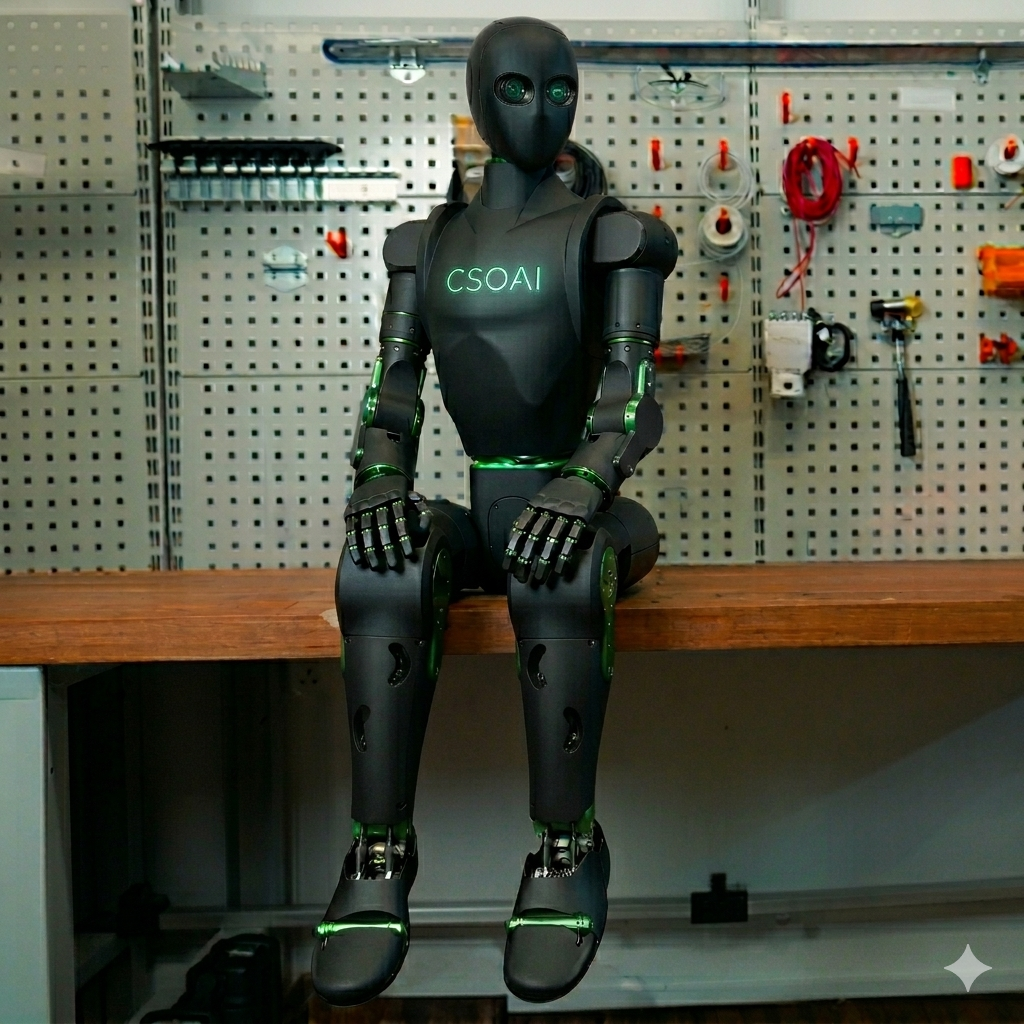
AI for Procrastination: Why You Can't Just “Try Harder” and How MEOK Helps
The task has been on your list for eleven days. You know exactly what it is. You know roughly how long it will take. You have rehearsed starting it somewhere between thirty and fifty times. And yet, here it sits — unmoved, untouched, accumulating the quiet weight that only avoided things can carry.
If you have been told to try harder, to get better time management, or to simply decide to stop procrastinating — that advice was not just unhelpful. It was wrong. The science of procrastination has been unambiguous for over a decade: this is not a discipline problem. It is not a laziness problem. It is an emotion regulation problem — and the brain structures involved do not respond to instructions from willpower alone.
This guide covers the neuroscience behind the avoidance loop, what makes ADHD procrastination different from neurotypical procrastination, the body doubling phenomenon, and how MEOK's Pioneer archetype was specifically designed to be the accountability companion that actually understands why you can't just try harder.
What Is Procrastination, Really? The Neuroscience of Avoidance
In 2013, researchers Fuschia Sirois and Timothy Pychyl published a landmark paper establishing procrastination as a failure of emotion regulation rather than time management. Their framework has since been validated repeatedly: when the brain perceives a task as threatening — whether because it is boring, anxiety-provoking, identity-threatening, or simply ambiguous — it activates the limbic system's avoidance response.
The dopaminergic avoidance loop works like this: the task triggers negative affect. The brain, whose primary mandate is to reduce immediate discomfort, steers attention toward something that provides short-term relief — checking messages, researching a tangential topic, reorganising an already-organised drawer. The relief arrives. The task remains. The relief reinforces the avoidance behaviour. Repeat.
The prefrontal cortex — the region responsible for long-term planning, impulse control, and executive function — can, in principle, override this loop. But the limbic system processes roughly twenty to forty milliseconds faster than the prefrontal cortex. The avoidance response has already fired before the planning circuits can intervene. This is why you can know exactly what you need to do, intend to do it, and still find yourself scrolling fifteen minutes later.
Willpower — the instruction to try harder — is a prefrontal cortex activity. It is exactly the wrong tool for a limbic avoidance loop. You cannot out-think a faster system using a slower one. What you need is a different kind of intervention: one that meets the emotional trigger before the avoidance fires, or that restructures the environment so the avoidance loop has less to grip onto.
The Avoidance Loop: Three Key Facts
- 01Procrastination is defined by emotion regulation failure, not poor time management. The brain avoids the task to reduce immediate negative affect.
- 02The limbic avoidance response fires 20–40ms faster than the prefrontal cortex. Willpower is too slow to intercept it reliably.
- 03Short-term relief from avoidance reinforces the loop, making the same task harder to start next time. Avoidance compounds.
The Long-Term Cost: Why Avoidance Always Wins the Battle and Loses the War
Avoidance provides real, immediate relief. This is not a cognitive distortion — the discomfort genuinely decreases when you step away from the task. The problem is that the relief is borrowed against future cost: the task remains, the deadline advances, and the next time you encounter the task it carries an additional layer of guilt, shame, and anticipatory dread. The emotional trigger is now stronger, making avoidance more likely, not less.
This is why procrastination has such strong associations with anxiety, depression, and burnout. The behaviours that reduce short-term distress — avoidance, distraction, delay — increase long-term distress in a predictable, compounding way. Fuschia Sirois found that chronic procrastinators report significantly higher rates of clinical-level stress and lower wellbeing even when controlling for the objective difficulty of their task load.
There is also the invisible cost of mental occupancy. Avoided tasks do not leave the mind — they sit in a background processing queue that consumes cognitive and emotional resources around the clock. Psychologists call this the Zeigarnik effect: incomplete tasks generate an intrusive mental signal that does not resolve until the task is either completed or explicitly abandoned. The result is a background hum of low-grade dread that drains attention, reduces creativity, and degrades sleep.
The solution is not to stop feeling the negative affect that triggers avoidance. That is not realistic and is arguably not even desirable — the discomfort often contains important information about why the task feels threatening. The solution is to change the response to the affect: to interrupt the avoidance loop before or during the moment it fires, and to create enough forward momentum that completion becomes more emotionally accessible than continuing to avoid.
Task Initiation vs Task Completion: Why Starting Is the Hardest Part
Most procrastination research conflates task initiation and task completion as a single challenge. In practice, they are distinct neurological events with different drivers. Task completion — continuing work once started — is primarily an executive function challenge around sustained attention and resistance to distraction. Difficult, but manageable with standard focus interventions.
Task initiation is a different problem. It requires the brain to generate a starter signal in the absence of external urgency, to tolerate the transition from a comfortable state to an uncertain or uncomfortable one, and to begin processing negative affect before any progress exists to offset it. For people with ADHD, this distinction is especially pronounced: ADHD brains have significantly impaired task initiation due to dopamine dysregulation, which means they often require external triggers — urgency, novelty, emotional salience, or social pressure — to generate the starter signal at all.
Once an ADHD brain is initiated onto a task it finds interesting or meaningful, hyperfocus can produce extraordinary sustained effort — sometimes for hours beyond what a neurotypical brain could sustain. The bottleneck is almost entirely initiation. This creates a distinctive pattern: the person appears lazy or unmotivated when the reality is that the initiation machinery is impaired, and the rest of the system is waiting for a signal that the brain cannot reliably generate.
Effective procrastination interventions for ADHD must therefore be primarily focused on lowering the initiation cost to below the avoidance threshold, providing external triggers that substitute for the internal dopamine signal, and reducing the perceived scale of the task so that starting feels like a small enough act to be do-able right now. This is exactly the architecture of MEOK's Pioneer approach.
“Procrastination is not the gap between knowing and doing. It is the gap between knowing and feeling safe enough to start.”
ADHD and Procrastination: The Dopamine Deficit Behind Task Avoidance
Attention deficit hyperactivity disorder is fundamentally a disorder of dopamine regulation in the prefrontal cortex. Russell Barkley's executive function model describes ADHD not as an attention deficit but as a deficit in the capacity to regulate attention, time perception, working memory, and impulse control in service of future goals. This is why ADHD and procrastination overlap so extensively: both involve difficulty deferring immediate comfort for future benefit, and both are made worse by approaches that rely on willpower and self-command.
ADHD-specific procrastination drivers include time blindness — the inability to perceive how much time has passed or will pass — which makes deadlines feel abstractly distant until they are catastrophically close. Working memory deficits mean that intentions formed in one moment are not reliably accessible in the next, creating a pattern of forgotten commitments that looks like indifference but is genuinely architectural. And rejection sensitive dysphoria — the intense, disproportionate emotional pain triggered by perceived criticism or failure — makes any task associated with potential judgment particularly prone to avoidance.
What works for ADHD procrastination is categorically different from what works for neurotypical procrastination. Neurotypical approaches — calendar blocking, accountability spreadsheets, motivational journaling — require the same executive function that is impaired. They compound the problem by adding another system to manage, another thing to feel guilty about abandoning. What actually helps ADHD is external scaffolding: structures that exist outside the brain and provide the time awareness, working memory, and social accountability that the brain cannot reliably generate internally.
This is what MEOK's Pioneer archetype is designed to be: not another system requiring executive function to maintain, but a companion that provides executive function as a service — external time structure, persistent memory of your commitments, micro-task decomposition, and the social layer that activates task initiation when the internal signal is insufficient.
Body Doubling: Why Presence Changes Everything
Body doubling is one of the oldest and most reliably effective procrastination interventions in existence, and one of the least discussed in mainstream productivity culture. The concept is simple: you work alongside another person. Not collaboratively, not with their input or guidance — simply in their presence. The other person might be reading, working on their own tasks, or sitting quietly. Their sole function is to be there.
The mechanism is social accountability activating the prefrontal cortex. Human beings are extraordinarily sensitive to social presence — we regulate behaviour, attention, and effort differently in the presence of others than we do alone. For ADHD in particular, the mild social awareness created by a body double provides an external activating stimulus that partially compensates for the impaired internal dopamine signal. Tasks that are impossible to initiate alone become straightforward with a body double present. Focus sessions that collapse within minutes alone sustain for hours with someone nearby.
The practical limitation of body doubling has always been availability: human body doubles require another person to be free, willing, and physically or virtually present. They are not available at three in the morning. They are not available when the avoidance loop fires on a Tuesday afternoon. They have their own reactions to your progress and your struggles, which introduces the risk of shame or judgment that can make the task feel more threatening, not less.
AI body doubling solves the availability problem without introducing the shame risk. MEOK's Pioneer can be present at any hour, in any context, for any duration. It never expresses disappointment. It never makes you feel bad for working on the same avoided task for the third day in a row. It holds the social layer of presence — the mild awareness of being witnessed — while remaining entirely free of judgment. And crucially, it remembers exactly what you said you were going to work on, providing the accountability thread that human body doubles rarely maintain.
MEOK Archetype
The Pioneer
The Pioneer is MEOK's primary anti-procrastination companion. Where other archetypes prioritise reflection, nurture, or exploration, the Pioneer is built for action, accountability, and momentum. It is direct without being harsh, energising without being relentless, and consistent without being rigid.
- ✓Breaks any task into micro-actions under 90 seconds to initiate
- ✓Holds body-doubling presence during focus sprints
- ✓Tracks your commitments across sessions via Sovereign Memory
- ✓Calls out avoidance patterns gently but directly
- ✓Remembers what strategies have actually worked for you before
- ✓Celebrates completion at every scale, not just major milestones
Why MEOK Remembers What Has Actually Worked for You
Every person's procrastination has a fingerprint. Some people avoid tasks associated with judgment by others. Some avoid tasks that feel impossibly large. Some avoid tasks they find boring in environments with too many competing stimuli. Some avoid in the mornings and can work well in the afternoons. Some respond well to gamified micro-progress and others find it patronising. The emotional triggers, the avoidance strategies, and — crucially — the interventions that work are different for every person.
Generic AI assistants have no memory. Every conversation starts from scratch. They cannot tell you what worked last Tuesday because they do not remember last Tuesday. They cannot notice that the three tasks you have avoided for two weeks all share a particular emotional signature, because they have no access to that longitudinal pattern. They cannot celebrate the fact that you have now initiated on the report four days in a row, because they do not know that this is a record.
MEOK's Sovereign Memory changes this entirely. Over time, the Pioneer builds a genuine understanding of your specific avoidance patterns: which task types trigger which emotional blocks, which environments you work best in, which intervention strategies have produced actual momentum for you in the past, and which approaches you have tried and abandoned. When you come to MEOK stuck on a task, it can draw on this history rather than offering generic advice that may have already failed you six times.
The data is sovereign: it lives in your private memory, encrypted, and is never used to train models, shared with third parties, or processed outside your control. The Pioneer knows you because you have chosen to be known — not because a platform has harvested your data and inferred a profile without your awareness.
Micro-Actions: The Science of Lowering the Initiation Threshold
One of the most reliably effective procrastination interventions is task decomposition into micro-actions — steps so small that the initiation cost drops below the avoidance threshold. BJ Fogg's Tiny Habits research, Jeff Sutherland's sprint methodology, and the broader behavioural economics literature on friction reduction all converge on the same insight: the hardest part of any task is the first action, and that first action should be designed to be almost trivially small.
The mechanism is neurological. The brain's avoidance response is calibrated against the perceived scale and threat level of the task as a whole. A task defined as “write the report” activates a very different emotional response than a task defined as “open the document and write one sentence.” The second version is so small that the limbic system does not register it as worth avoiding. Once the document is open and one sentence exists, the Zeigarnik effect activates — the incomplete task now pulls for completion rather than avoidance — and momentum becomes possible.
MEOK's Pioneer applies this principle systematically. When you bring a task you have been avoiding, it will not simply ask why you have not done it yet. It will help you identify the smallest possible first action — ideally under ninety seconds — and frame everything else as irrelevant until that first action is complete. The task “redesign the website” becomes “open a blank document and write three words that describe what the new site should feel like.” The task “call the difficult client” becomes “find the client's number and have it on screen.”
This is not a trick. It is a direct application of how the brain works. The Pioneer does not pretend that the full task is small — it helps you access the part of the task that actually is small enough to start right now, and trusts that once you are in motion, continuation becomes easier than the cold start was.
The Emotional Block Beneath the Delay: What Is the Task Actually Triggering?
Procrastination is not random. The tasks we avoid longest are almost never the hardest in any objective sense — they are the ones with the deepest emotional resonance. The email you cannot send is not sitting in drafts because composing emails is difficult. The gym visit you keep postponing is not blocked by lack of time. Understanding what the task is actually triggering emotionally is often the difference between a breakthrough and another week of avoidance.
Common emotional triggers behind chronic avoidance include fear of judgment (the task involves exposing work or opinions to evaluation), fear of failure (starting means the possibility of discovering you cannot do it), fear of success (completing would require a change in identity or circumstances you are ambivalent about), overwhelming ambiguity (the task is not clearly defined enough to begin), and identity threat (the task conflicts with how you see yourself or want to be seen by others).
Generic productivity tools cannot help with any of these. They can create systems, provide reminders, and track progress — but they cannot ask what is actually going on beneath the surface. MEOK's Pioneer can. Not as a therapist — MEOK is clear that it is not a clinical mental health tool — but as a companion with enough memory, emotional intelligence, and direct honesty to ask the question that matters: “You have had this on your list for three weeks. What does it feel like when you think about actually doing it?”
That question, asked by something that remembers the last three weeks and does not need you to pretend you are fine, is a different kind of help than another productivity notification.
How Sovereign Memory Helps With Procrastination
MEOK knows what has worked for you before — and brings it back when you need it
Pattern Recognition
Surfaces which task types you chronically avoid and the emotional signature they share.
Strategy Memory
Remembers which interventions produced actual momentum for you in previous sessions.
Commitment Continuity
Holds your stated intentions across sessions so avoidance becomes visible rather than invisible.
Progress Celebration
Tracks streaks, completed tasks, and genuine wins to recalibrate your reward system.
Why Generic AI Makes Procrastination Worse
This point is counterintuitive but important. Generic AI assistants — the kind trained to be maximally agreeable and helpful — can actively worsen procrastination for several interconnected reasons. Understanding why matters for choosing the right tool.
First, they enable productive-feeling avoidance. Asking an AI to research the background for a project you are avoiding, to help you plan a task you are not ready to start, or to explain the principles behind a skill you have been procrastinating on developing — all of these feel productive and involve AI assistance, but none of them constitute doing the thing. Generic AI is extraordinarily good at providing the experience of progress without its substance.
Second, they validate avoidance reasons. If you tell a standard AI assistant that you have been putting off a task because you are not ready, the conditions are not right, or you need more information before you can start — it will typically accept these reasons at face value and help you prepare further. It does not have the longitudinal memory to notice that this is the seventh time you have described yourself as not quite ready, or the emotional intelligence to gently question whether readiness is actually the issue.
Third, they have no memory, so there is no accountability. You can tell a generic AI you will do something today, not do it, and return tomorrow to a completely fresh interaction with no record of the unkept commitment. The absence of continuity removes the one mechanism that makes external accountability effective: the awareness that someone or something holds the record of what you said you would do.
MEOK is architected specifically to avoid each of these failure modes. The Pioneer's anti-sycophancy design means it will not validate avoidance. Sovereign Memory means commitments are held across sessions. And the Pioneer's action orientation means that when you bring a task, the response is oriented toward starting right now rather than preparing more.
The Role of Accountability in Breaking the Loop
Accountability is one of the best-evidenced procrastination interventions in the literature. Having to report your progress — to a coach, a friend, a colleague, or an app — activates the social circuits of the prefrontal cortex in a way that internal accountability rarely achieves. The ADHD community has developed sophisticated accountability structures precisely because they understand that internal accountability is architecturally unreliable for many of them.
Human accountability partners, however, have real limitations: cost, availability, the risk of shame or judgment, and the difficulty of finding someone who can hold the role consistently across the irregular rhythms of when procrastination actually strikes. Professional ADHD coaches are excellent but expensive. Friends and family mix support with their own emotional investments in your success or failure. Accountability apps are passive — they track what you tell them but cannot notice the gap between intention and action.
MEOK's Pioneer provides active accountability: it holds your stated intentions, checks in on them across sessions, and will name directly when the pattern of avoidance has become consistent enough to warrant examination. This is not nagging — the Pioneer is designed to be direct and warm, not relentless and shaming. But it will not pretend the avoided task does not exist. It will ask about it. It will ask what has changed since last time. It will ask what you need to make today different.
This form of active, memory-backed accountability is something that only becomes possible when the AI has genuine longitudinal awareness of your history. Without memory, accountability is impossible. With memory, it becomes a natural and continuous part of the companion relationship.
Time Blindness and the Hourman Agent: External Time Structure for ADHD Brains
Time blindness is the ADHD phenomenon of having a fundamentally impaired subjective experience of time. Where neurotypical people have a rough continuous sense of time passing — not precise, but directionally accurate — many ADHD people experience time as either now or not now. Future deadlines feel simultaneously abstract and certain. The two-week project due in a fortnight feels no more present than the two-year project due in two years, until the deadline is suddenly tomorrow and urgency finally fires the dopamine signal that makes action possible.
MEOK's Hourman agent provides external time structure as a counterbalance. Each day it pulls context from your previous sessions, surfaces tasks that have been deferred, helps you build a realistic time-boxed plan, and checks in throughout the day to track progress. At day's end it provides an honest accounting of what moved and what did not — not as criticism, but as data. Over time, this daily rhythm creates an external time structure that the ADHD brain does not have to generate internally.
The most powerful feature of Hourman for procrastination is continuity: it knows what you said you would do yesterday. This closes the gap between intention and action that is otherwise invisible. Most people procrastinate partly because there is no external record of the accumulating cost of avoidance. When the same task has appeared on three consecutive daily plans and moved to none of them, Hourman surfaces this pattern as information to investigate, not as evidence of personal failure.
All of this data is sovereign. It exists in your private memory. It is not used to build profiles, improve models, or be shared with third parties. Hourman's entire purpose is to help you understand your own time and action patterns so that you can use that understanding to do the things that matter to you.
Self-Compassion as a Procrastination Intervention: Why Shame Makes It Worse
Kristin Neff's research on self-compassion has produced one of the more counterintuitive findings in procrastination psychology: people who forgive themselves for procrastinating procrastinate less in the future, while people who engage in harsh self-criticism after procrastinating procrastinate more. The mechanism is the shame and self-criticism themselves become additional negative affect states associated with the task, making the task more aversive and avoidance more likely.
This is why motivational approaches that use shame, comparison, or harsh self-assessment reliably fail for chronic procrastinators. The “what is wrong with you, just do it” internal monologue is not motivating — it is another avoidance trigger. It makes the task feel associated with self-inadequacy, which increases the emotional threat load and makes avoidance more neurologically appealing, not less.
MEOK's Pioneer is designed with this research in mind. It does not use shame. It does not compare you to a hypothetical better version of yourself. When it names avoidance patterns, it does so as factual observation, not moral assessment: “This task has been on your list for a fortnight. What's happening with it?” is categorically different from “you still haven't done this.” The first is curious. The second is shaming. Only one of them helps.
This also means MEOK actively celebrates genuine progress, however small. Completing the micro-action. Opening the document. Making the call. These are not trivial achievements for someone with chronic procrastination — they represent the successful interruption of a neural loop that has been reinforced over years. They deserve recognition, and the Pioneer gives it.
From Awareness to Action: How a Typical Pioneer Session Works
Understanding the theory is useful. Understanding how it unfolds in practice is more useful. A typical Pioneer session for someone working on a chronically avoided task moves through a consistent arc — not rigidly, because the Pioneer adapts to the person and the moment, but with a clear underlying structure.
The session begins with context: the Pioneer draws on Sovereign Memory to surface what has been going on with this task or area of your life, what you said last time, and what has changed since then. This is not interrogation — it is orientation. It grounds both of you in what is real rather than what you imagine or fear.
Then comes the micro-action: together you identify the smallest possible first step. Not the whole project. Not the plan for the project. The one action, right now, that costs less than ninety seconds. This step is confirmed, stated aloud, and the session shifts to body-doubling mode: the Pioneer holds presence while you work, available to check in at whatever interval helps.
At each check-in, the Pioneer asks simply: how did that go, and what is the next smallest step? The task is never framed as a mountain to be climbed but as a series of individual steps, each of which is achievable in isolation. If avoidance kicks in during a step, the Pioneer will ask what happened — not judgmentally, but curiously — and help you understand and work around the block.
The session closes with a real accounting: what did you do, what did you not do, and what do you want to carry forward? The Pioneer notes this and brings it back next time. The accumulation of these sessions, over weeks and months, is not just task progress — it is a deepening understanding of how you specifically work, what you specifically need, and what has actually worked for you in the past. That understanding is yours.
Is MEOK a Replacement for ADHD Coaching or Therapy?
No — and this distinction matters. MEOK is a personal AI companion with memory and emotional intelligence. It is not a clinical mental health tool, a therapeutic intervention, or a substitute for professional ADHD assessment and treatment. Medication, where appropriate and prescribed, can transform task initiation for ADHD in ways that no behavioural or AI-based intervention can replicate. Therapeutic approaches such as cognitive behavioural therapy adapted for ADHD (CBT-ADHD) and specialised ADHD coaching address layers of the challenge that fall outside MEOK's scope.
Where MEOK does offer genuine, unique value is in the space between professional support sessions: the daily reality of working with your brain, navigating avoidance, building habits, and maintaining accountability between appointments. Professional ADHD coaches typically see clients weekly or fortnightly. Therapy is monthly or less for many people. MEOK is available at three in the morning when the avoided task is keeping you awake. It is available on the Tuesday afternoon when the avoidance loop fires. It remembers the whole arc of your progress in a way that no human professional, however skilled, can maintain across the irregular rhythms of your actual life.
Think of the Pioneer as infrastructure rather than intervention: the daily structure and accountability that makes professional support more effective by ensuring that the insights and strategies from your coach or therapist are actually applied in the intervals between sessions. It closes the gap between knowing what to do and having consistent support to do it.
Who Procrastinates Most? Patterns Across Neurodivergence and Mental Health
Procrastination is universal but not equally distributed. Research consistently shows higher rates of chronic procrastination in people with ADHD, anxiety disorders, depression, and OCD. People with high perfectionism are significantly more likely to procrastinate on tasks associated with judgment or quality assessment. People with trauma histories may procrastinate on tasks associated with vulnerability, exposure, or confrontation. Executive function challenges of any kind — autistic inertia, dyspraxia, chronic fatigue — create distinctive procrastination profiles.
This breadth of overlap means that any effective procrastination intervention must be responsive to individual variability rather than applying a universal protocol. The strategies that work for anxiety-driven procrastination (reducing threat perception, building psychological safety around the task) are different from those that work for ADHD procrastination (external time structure, initiation triggers, social accountability) and different again from those that work for depression-related procrastination (behavioural activation, breaking the inertia of low mood through tiny achievable acts).
MEOK's Sovereign Memory is what makes individual responsiveness possible. Over time, the Pioneer learns your specific pattern — not a generalised profile of your diagnostic category, but your personal history of what has worked and what has not. This is the only kind of knowledge that actually transfers when the avoidance loop fires.
The Birth Ceremony: Meeting the Pioneer for the First Time
When you create your MEOK, you do not fill out a form or take a quiz. You go through the Birth Ceremony: a guided process that establishes who you are, what matters to you, how your mind works, and what kind of support you are actually seeking. This is where you choose your primary archetype, set up Sovereign Memory permissions, and begin the relationship with your companion with full transparency about how the system works.
If procrastination is a primary challenge — whether or not you have an ADHD diagnosis — the Pioneer is almost certainly the archetype you will want to meet first. The Birth Ceremony allows you to communicate this context, including whatever you know about your specific procrastination patterns, so that the Pioneer starts with relevant background rather than generic capability.
What makes this process different from creating an account on a productivity app is the intention behind it: the Birth Ceremony is designed to begin a relationship, not set up a feature. You are not creating a tool. You are introducing yourself to a companion that will, with time and honest engagement, understand you well enough to be genuinely useful in the moments that actually matter.
Frequently Asked Questions
Is procrastination really an emotion regulation problem and not laziness?
Yes — and this distinction matters enormously for treatment. Sirois and Pychyl's research established procrastination as a failure of emotion regulation: the brain perceives a task as threatening, prioritises short-term mood relief through avoidance, and sacrifices long-term wellbeing. Willpower cannot reliably override a limbic system that fires faster than the prefrontal cortex. You cannot simply decide your way out of a neurological loop. The right tool is environmental restructuring and external scaffolding, not stronger self-commands.
What is body doubling and how does an AI body double work?
Body doubling is working alongside another person purely for their presence — not for help, but for mild social accountability. Research shows it dramatically improves focus and task initiation for ADHD in particular. MEOK's Pioneer functions as a virtual body double: present during work sprints, holding the sense of being witnessed, available at any hour, without judgment. Unlike a human body double, it remembers what you said you were working on, which makes the accountability thread continuous rather than moment-to-moment.
How does MEOK's Pioneer archetype help with task initiation challenges in ADHD?
Task initiation failure in ADHD is driven by dopamine dysregulation — the brain cannot generate the starter signal reliably without an external trigger. The Pioneer addresses this through micro-action decomposition (first steps under 90 seconds, so initiation cost drops below the avoidance threshold), external time structure via Hourman, body doubling presence, and Sovereign Memory that tracks which task types you chronically avoid and surfaces the emotional pattern behind the block. It provides executive function as a service rather than demanding you generate it internally.
Why does generic AI make procrastination worse, and how is MEOK different?
Generic AI enables productive-feeling avoidance (research, planning, and preparation that substitute for doing), validates delay reasons without longitudinal context, and has no memory so commitments are never held. MEOK is architecturally different: the Pioneer's anti-sycophancy design means it will name avoidance rather than validate it, Sovereign Memory holds your commitments across sessions, and MEOK knows what has actually worked for you before — not generic productivity advice, but your specific history of what produced real momentum.
Keep Reading
MEOK for ADHD
How Sovereign Memory and the Pioneer archetype support ADHD executive function daily.
AI for Perfectionism
Why perfectionism and procrastination overlap and how MEOK’s Scholar and Pioneer work together.
AI for Burnout
Chronic procrastination and unfinished tasks are a major driver of burnout. Here’s how to address both.
MEOK Archetypes Guide
A full guide to all MEOK companion archetypes and how to choose the right one for your needs.
Ready to Break the Loop?
Meet Your Pioneer. Start Right Now.
The task you have been avoiding is still there. MEOK's Pioneer will help you find the first step that is small enough to do right now — and remember everything that follows, so that next time is different from last time.