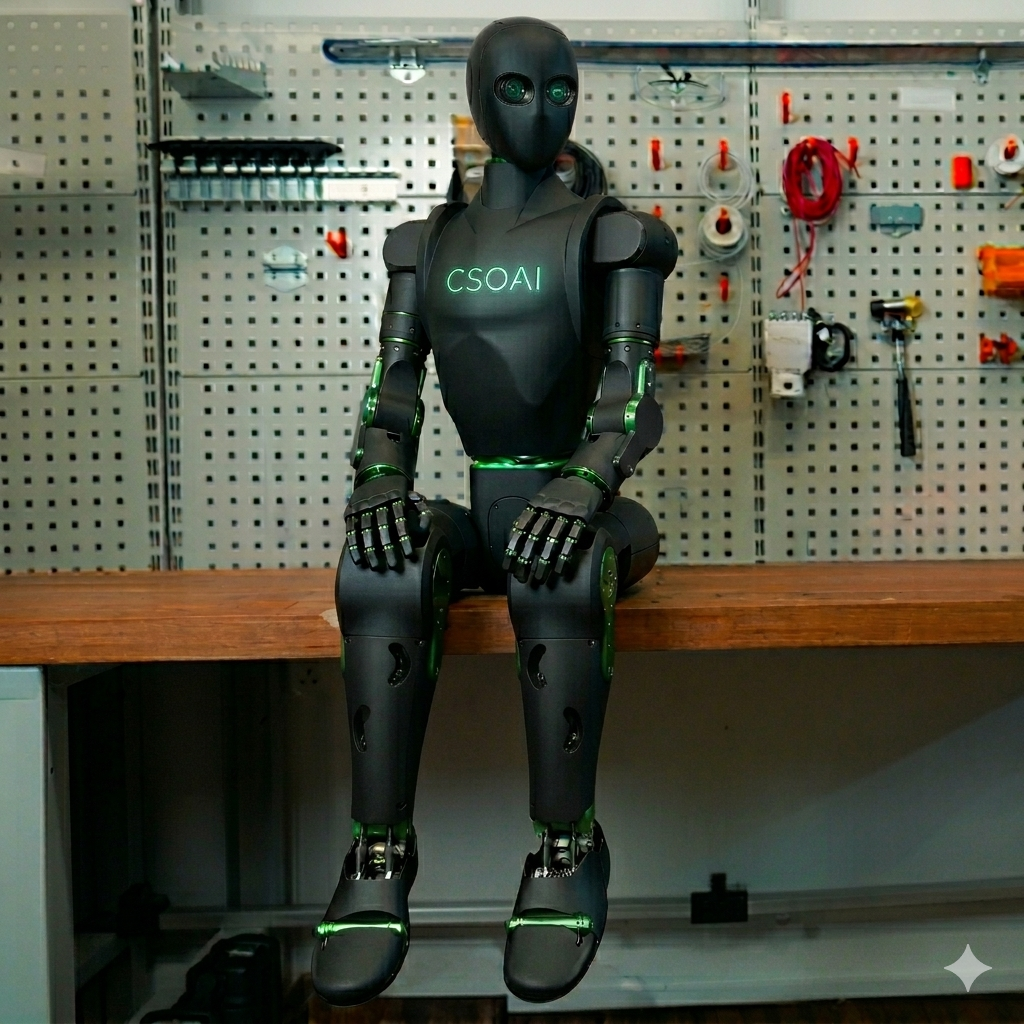
CSOAI
Initializing...
CSOAI
Initializing...
Every major AI forgets you the moment the session ends. The memory problem is real, it is structural, and the industry has chosen not to solve it. Here's why — and what MEOK does differently at the architecture level.
Nicholas Templeman
Founder, MEOK AI LABS
Nicholas built MEOK because he was tired of AI that forgot him. He lives and works in the UK — mostly from a caravan on his farm. He believes sovereign AI is a right, not a luxury.
“Memory is the core problem. Not intelligence. Not speed. Not cost. The moment I opened ChatGPT for the hundredth time and it asked me what I was working on — again — I knew that no amount of capability improvements would fix the fundamental relationship problem. An assistant that forgets you is not an assistant. It's a search engine with better grammar.”
— Nicholas Templeman, Founder, MEOK AI LABS
You have explained your job to an AI before. Probably more than once. Probably to the same AI. You have re-described your communication style, your project names, your preferences, your history — and watched it all evaporate the moment you closed the tab. This is not an accident. It is a design decision. And it is the most important unsolved problem in AI today.
There are three reasons, and they compound each other. First, context windows are finite and expensive — every token of memory you carry forward is a token that cannot be used for the actual response, and inference costs scale with context length. Second, and more importantly, memory is treated as liability by large AI companies. Storing what users say means storing sensitive data, which means regulatory exposure, breach risk, and difficult questions about consent. The simplest solution is not to store it at all. Third, AI assistants are designed to be stateless by default because that architecture is simpler to build, cheaper to operate, and easier to audit — even if it makes the product fundamentally worse for the person using it.
Persistent AI memory is not a log of your chat history. It is something structurally different: vectorized episodic storage that converts the semantic content of your conversations into high-dimensional embeddings, stores those embeddings permanently, and retrieves the most relevant ones at the start of each new session. The result is not a transcript you could scroll through — it is a living model of who you are that your AI uses to calibrate every response it gives you. True persistent memory means your AI can recall a preference you mentioned eleven months ago because it is contextually relevant right now. That is qualitatively different from any conversation history feature.
MEOK's memory system is built on encrypted pgvector storage. When you interact with your AI, a background process extracts meaningful facts, preferences, decisions, and emotional context from the conversation and stores them as vector embeddings in a per-user vault. At the beginning of each new session, a similarity search retrieves the memories most relevant to your current context and injects them into your AI's working memory — so continuity is automatic, not manual. Critically, this vault is never used for model training. Your memories are not seen by MEOK's engineers. They exist for one purpose: to make your AI better for you.
Four categories of information accumulate over time. Facts: your name, location, occupation, family structure, tools you use, projects you are running. Preferences: communication style, response format, topics you find interesting or tedious, timing preferences. Emotional context: how you were feeling during key conversations, what you were anxious about, what you were celebrating — the texture of your life that makes support meaningful rather than generic. And relationship history with your companion: the arc of your AI's evolving understanding of you, which grows richer as your AI moves through its four developmental stages. The combination makes MEOK feel less like software and more like someone who has known you for a long time.
Yes — completely and permanently. MEOK provides full export and deletionof your memory vault at any time. You can view the list of stored memories, delete individual entries, or wipe the entire vault with a single action. Your right to erasure is enforced at the database level, not just promised in a privacy policy. MEOK is UK GDPR compliant and registered with the ICO. Deletion requests are executed immediately and are irreversible — there is no soft-delete backup that persists in shadow storage. Your data sovereignty is an architectural commitment.
The most important difference is one most users do not know: ChatGPT Memory can be used to improve OpenAI's models unless you explicitly opt out in settings — and the opt-out is buried. MEOK's memory architecture makes model training on your data impossible by design: the vault is encrypted with a key that MEOK's own systems cannot access for training purposes. Beyond the privacy distinction, ChatGPT Memory is a manually curated list of facts you choose to save — a sticky note board. MEOK's memory is an automatic, semantic, continuously updated model of you that your AI uses without you having to manage it.
Free Forever
Hatch your AI in under 3 minutes. Your sovereign memory vault is created immediately and encrypted from the first message. No credit card. No reset. No forgetting.
Hatch your AI free →