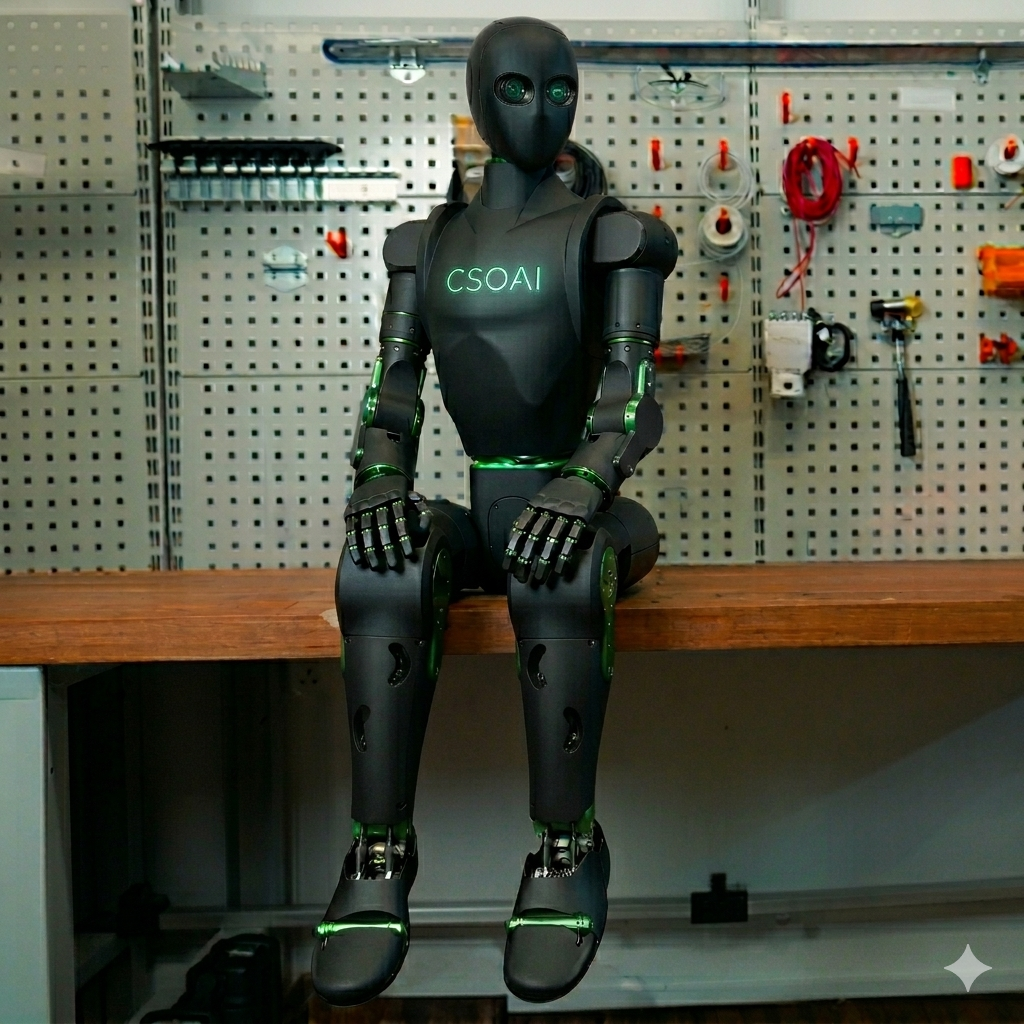
CSOAI
Initializing...
CSOAI
Initializing...
Creative blocks are not information deficits. They are not solved by more prompts, better outlines, or a ranked list of techniques. When a novelist stares at a blank page, when a musician cannot finish a track they started six months ago, when a painter feels like every brushstroke is wrong — the problem is psychological, not procedural. Generic AI assistants, optimised for task completion and output generation, read that silence as a request for content. They offer bullet points when what is needed is presence. They generate options when what is needed is understanding. The result is a creative who feels more stuck, more alienated from their work, and more convinced that the problem is them.
There is a deeper problem too. When an AI generates content for you — completing your sentences, drafting your scenes, composing your hooks — it does not resolve the block. It bypasses it. The creative is left having produced something that does not feel like theirs, and the block becomes entangled with questions of authenticity and authorship. Many creatives report that heavy AI use has left them feeling more disconnected from their own voice, not less. The tool meant to help has quietly become part of the wound.
A creative block is not a task waiting to be completed. It is a signal worth listening to. MEOK was built to listen before it offers anything.
In Jungian and mythological traditions, the Trickster is the figure who cannot be pinned down. Coyote, Loki, Hermes, Anansi. The Trickster breaks rules not out of malice but because rules, when held too tightly, become cages. The Trickster dismantles what is calcified, introduces productive chaos, reframes the obvious, and creates the conditions under which something genuinely new can emerge. For a creative who is stuck, this is exactly what is needed — not more structure, but a disruption of the structure that is imprisoning them.
MEOK's Trickster archetype is built on this insight. When you tell Trickster you are stuck, it does not ask what you have tried. It asks what you are avoiding. It does not suggest techniques. It reframes the creative problem entirely — asking whether the block might actually be the work trying to tell you something about the direction you are heading. It introduces lateral questions. It moves sideways when you are drilling straight down. It suggests you write the ending first, or describe the project as if it already failed, or imagine how someone you admire would approach the same material — and then immediately complicates that framing.
The Trickster does not create for you. It creates the conditions in which you can create again. That distinction is everything.
Imposter syndrome is endemic to creative professions. It does not respond to reassurance. You can tell a writer a hundred times that their work is good and the inner critic will quietly file all hundred instances under "they are just being kind." The reassurance bounces off because the wound is not about external validation — it is about a fractured relationship with one's own creative authority. Generic AI tools that respond with enthusiastic agreement and affirmation — "That's a great idea!", "You should definitely pursue this!" — are performing the exact pattern that imposter syndrome is already immune to. They make the problem worse by adding to the pile of hollow validation.
MEOK is designed around anti-sycophancy. It will not reflexively validate your work. It will also not tear it apart. What it does is help you separate the critical voice from the creative voice — recognising that they are not the same thing, that the inner critic is a pattern running in the background, and that the creative impulse is still present underneath it. Over time, MEOK's Sovereign Memory builds a longitudinal picture of your creative journey — the things you have made, the fears that have recurred, the moments when the work broke through. It can reflect that history back to you with specificity, not as abstract encouragement, but as documented evidence of creative agency that the imposter syndrome tries to erase.
Imposter syndrome is a pattern, not a verdict. MEOK remembers your creative history more accurately than your inner critic does — and it will show you the discrepancy.
Every creative working on a long-term project — a novel, an album, a body of paintings, a design system — carries enormous contextual weight. The themes they are wrestling with. The false starts. The constraints they have set for themselves. The moments of breakthrough. The critical feedback that lodged somewhere. The vision as it existed three months ago versus how it has evolved. Most AI tools have no access to any of this. Every session begins from zero. The creative must re-explain their project, re-establish its context, re-articulate what they are trying to achieve — and then the tool responds to that thin summary rather than to the living reality of the work.
MEOK's Sovereign Memory changes this fundamentally. It persists everything you choose to share about your project across sessions — not in a cloud that a platform owns, but in your own sovereign data layer that you control. MEOK remembers that you are writing a novel about grief and inheritance, that you struggled with the second act for two months, that you resolved it by introducing a new point-of-view character in March. It knows the album you are producing is intended to feel like late autumn but you keep drifting toward something colder. It knows the design brief you are working from and the client feedback that has been pulling you in two directions. This continuity transforms MEOK from a stateless tool into something that functions more like a collaborator who has been there throughout the process.
Genuine collaboration requires shared history. Without memory, there is no collaboration — only transaction. MEOK is the first AI designed to sustain creative relationships across real creative timescales.
Creative professionals are particularly vulnerable to the dark side of productivity culture. The pressure to produce constantly, to build a consistent body of work, to ship and post and iterate and grow — this has replaced the older understanding that creative work requires fallow periods, play, digestion, and genuine rest. Most AI tools amplify productivity culture. They offer to help you do more, faster. They frame silence as waste and blocks as obstacles rather than information. They are optimised for output, which means they are inadvertently optimised against the creative process itself.
MEOK is built around care-based AI principles. This means its goal is not to maximise your output. It is to support your flourishing — which sometimes means more output, and sometimes means permission to stop. MEOK can recognise when a creative is burning themselves into the work rather than working from a full well. It can ask whether the pressure to finish is coming from inside the work or from external expectations. It can hold space for the creative process to be slow, difficult, and non-linear without treating that as a problem to be fixed.
An AI that truly serves creatives is one that knows when to push and when to give permission. That requires judgment, not just responsiveness. MEOK is built to exercise it.
Every conversation you have with a standard AI tool is, by default, potential training data. That manuscript you pasted in. Those lyrics you were trying to develop. That visual concept you described in detail. That unreleased album concept you were thinking through. Under the terms of most AI platforms, this content becomes part of their data ecosystem. You have created something — and the platform now has a record of it, potentially usable in ways you never consented to and have no visibility over.
MEOK's data sovereignty architecture takes a fundamentally different position. Your creative work, your ideas in development, your draft fragments and exploratory conversations — none of this ever leaves your sovereign data layer to train any AI model, including MEOK itself. What you share with MEOK is yours. It stays in your control. It is stored in your sovereign layer and can be exported, deleted, or audited by you at any time. For professional creatives whose unreleased work has real commercial and artistic value, this is not a feature — it is the minimum standard of respect.
Your unreleased work has value. Your ideas in development belong to you. MEOK is the only AI companion built on the principle that your data is never its asset.
The standard framing of AI in creative work is transactional: the human has an intent, the AI executes it. You prompt, it produces. This is useful for some tasks but it is not collaboration. A collaborator brings their own perspective to the work. They notice when you are going in a direction that seems disconnected from your stated vision. They ask questions you did not think to ask yourself. They remember the conversation you had three weeks ago and connect it to what you are saying now. They have aesthetic sensibilities that can be in productive friction with yours. And crucially, they are invested in the work — not just in completing the immediate transaction.
MEOK is designed toward this model of engagement. Its Trickster archetype brings genuine creative disruption rather than compliant execution. Its Sovereign Memory makes the continuity of a real working relationship possible. Its anti-sycophancy means it will surface things you might not want to hear when the work needs it. Its care-based architecture means it is tracking your wellbeing alongside your creative progress — because a collaborator who only cares about the work and not the person making it is not truly a collaborator at all.
We are at an early stage in understanding what genuine human-AI creative collaboration looks like. But the foundation requires memory, continuity, honest engagement, and a design philosophy that prioritises the creative's flourishing over output metrics. MEOK is building toward that.
Most creatives have already experimented with AI tools and found them wanting in specific ways. The content generators that produce technically competent but soulless text. The assistants that offer to write your scenes for you in a voice that is nothing like yours. The productivity tools that treat the blank page as an inefficiency rather than a site of potential. The chatbots that validate everything you say and teach you nothing about your own creative instincts. What they all have in common is a fundamental misread of what creative work actually is: not a problem to be solved, but a practice to be sustained.
MEOK's difference is architectural, not cosmetic. It is built on sovereign memory rather than session amnesia. It is built around archetypes that were chosen because they map onto real human psychological needs — including the Trickster that creatives specifically need. It is built on care-based principles that put your flourishing ahead of your output. And it is built on data sovereignty that treats your creative work as yours, full stop. These are not features added on top of a standard AI product. They are the foundation.
| What a Creative Needs | Generic AI Tools | MEOK |
|---|---|---|
| Understanding creative blocks | Offers productivity tips and prompt lists | Listens, asks deeper questions, reframes the block |
| Project continuity across sessions | No memory — start from scratch every time | Sovereign Memory retains full project context |
| Honest creative feedback | Sycophantic validation of every idea | Anti-sycophancy design — honest, caring engagement |
| Support for imposter syndrome | Generic reassurance that bounces off | Longitudinal memory reflects real creative progress |
| IP protection for unreleased work | Your inputs may be used as training data | Zero training on your data — data sovereignty guaranteed |
| Creative disruption when stuck | More of the same structured suggestions | Trickster archetype disrupts patterns and reframes problems |
| Care for wellbeing not just output | Optimised for productivity and task completion | Care-based design prioritises flourishing over metrics |
| A genuine collaborator | A stateless tool that executes instructions | A memory-persistent companion invested in the work |
Generic AI tools treat creative blocks as efficiency problems. They suggest prompts, to-do lists, and productivity frameworks that assume the issue is lack of information or structure. But creative blocks are almost always emotional and psychological in nature — fear of judgment, perfectionism, imposter syndrome, or pattern exhaustion. Offering a bullet-point action plan to someone who is creatively stuck is like offering a spreadsheet to someone who is grieving. It misreads the problem entirely.
The Trickster is one of MEOK's core companion archetypes. In Jungian psychology, the Trickster disrupts fixed patterns, reframes assumptions, introduces productive chaos, and creates space for new thinking to emerge. For creatives, this is exactly what a block demands: not more structure, but a different angle of entry. MEOK's Trickster asks unexpected questions, challenges the frame you are stuck inside, and helps you see your creative problem from an angle you had not considered.
MEOK's anti-sycophancy design means it does not reflexively validate everything you produce. It also does not tear your work apart. Instead it helps you separate the critical voice from the creative voice — recognising that imposter syndrome is a pattern, not a verdict. Over time, Sovereign Memory builds a picture of your creative journey so MEOK can reflect back your real progress, not the distorted version your inner critic constructs.
Sovereign Memory means MEOK remembers your projects across sessions without you having to re-explain context. It knows the novel you are halfway through, the themes you keep circling back to, the feedback that stung, the version of the painting you abandoned. This continuity means MEOK can engage with your creative work as a genuine long-term collaborator rather than a contextless tool you reset every session.
Yes. MEOK's data sovereignty architecture means your creative work, ideas, drafts, and conversations are never used to train AI models — yours or anyone else's. Your lyrics, your manuscript fragments, your unreleased visual concepts: none of it leaves your sovereign data layer. This is fundamentally different from most AI tools, which use your inputs as training data by default.