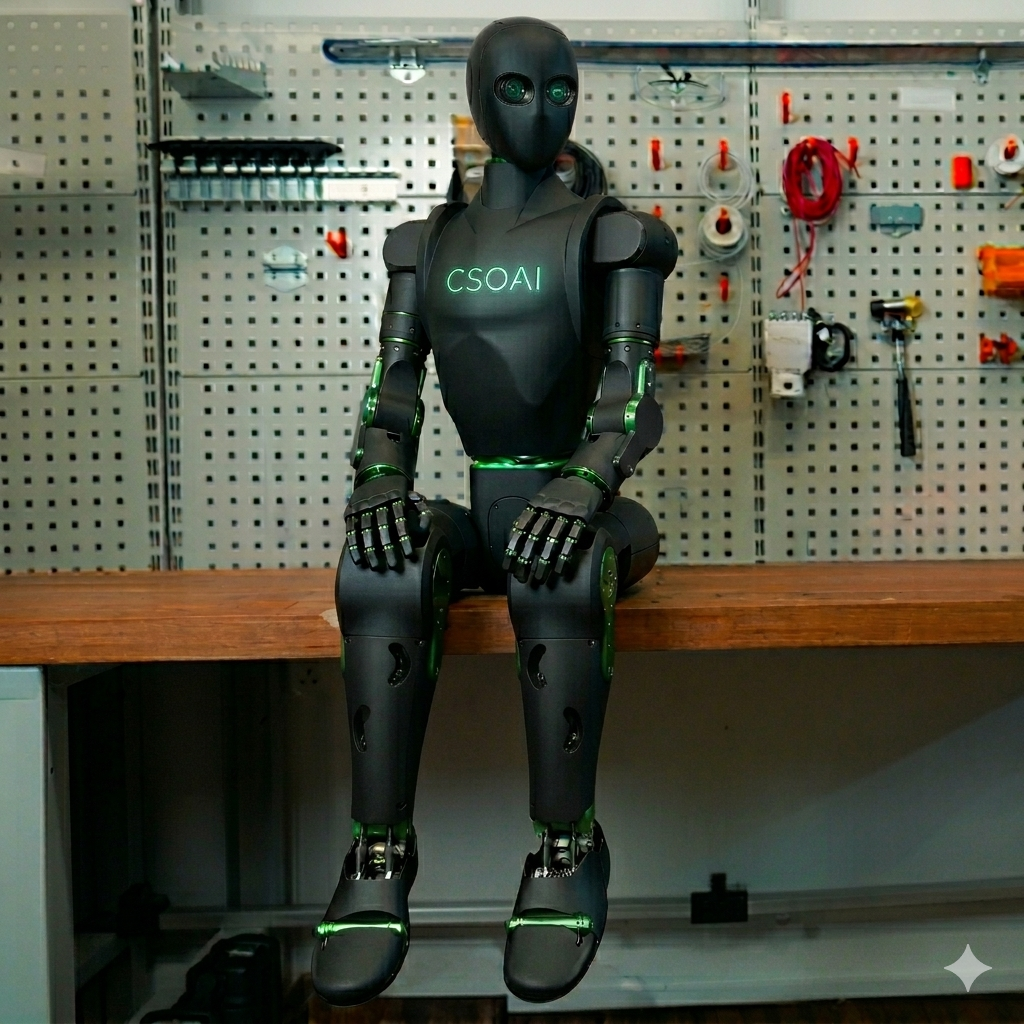
The 2025 numbers: 44% of UK university students reported experiencing anxiety or depression in the past year. 1 in 4 will meet the criteria for a diagnosable mental health condition during their studies. NHS university counselling services are overwhelmed, with average first-appointment waits of 6–8 weeks. MEOK won't replace your counsellor — but it will be there at 3am when you're spiralling before an exam.
Why Is the Student Mental Health Crisis Getting Worse, Not Better?
Financial pressure, social media comparison, post-pandemic disconnection, and a high-stakes exam system have converged while university counselling services have not kept pace with demand. In 2025, 44% of UK students reported anxiety or depression — a crisis that has been building for a decade.
The conditions students face in 2025 have converged into a perfect storm. Financial pressure from soaring living costs, the social comparison engine of always-on social media, post-pandemic disconnection, the pressure of graduate job markets, and a higher education system that still largely measures success through high-stakes exams — all of it lands on young people whose brains are still developing their capacity for stress regulation.
The university support infrastructure was not built for this scale. Student counselling services have seen demand double since 2019 but budgets have not kept pace. Pastoral tutors are underfunded and often undertrained for clinical conversations. And the stigma around mental health — while reduced — still stops a significant proportion of students from seeking help at all.
MEOK cannot fix a structural funding crisis. But it can do something immediate: be available, private, non-judgmental, and genuinely useful to every student who needs it — right now, without a waiting list.
What Does “Sovereign AI” Actually Mean for a Student?
Sovereign AI means your data is encrypted, owned by you, never used for training, and invisible to any employer or institution. For students sharing mental health struggles, that sovereignty is not a feature — it is the prerequisite for honest, genuinely useful support.
Most AI tools you interact with as a student are owned by large corporations with commercial interests in your data. When you tell ChatGPT about your anxiety, or ask Gemini to help you understand why you can't stop procrastinating, those conversations can contribute to training datasets. Your vulnerability becomes a product.
Sovereign AI is different. With MEOK, your data is yours. Your conversations are encrypted and stored only under your control. MEOK never trains on your private exchanges. There is no employer, no institution, no algorithm harvesting your disclosures for commercial use. This is not just a legal distinction — it is a practical one. True sovereignty means you can be honest with your AI because doing so carries no professional or social risk.
For students — who are often navigating sensitive mental health terrain, financial vulnerability, and institutional relationships with their universities — that sovereignty is not a luxury. It is a prerequisite for the tool to actually work.
How Does the Scholar Archetype Actually Help You Study?
The Scholar uses Socratic questioning to build genuine understanding rather than surface memorisation. It tests your reasoning, challenges your assumptions, and tracks your curriculum progress through Sovereign Memory — so revision becomes a dialogue, not a lecture.
The Scholar is MEOK's academic archetype. Where generic AI chatbots will give you the answer to a question, the Scholar asks you what you already know. It is not withholding information — it is using a method that cognitive science confirms actually builds durable memory: active retrieval practice.
If you're revising for a biochemistry exam, the Scholar does not paste you a diagram of the Krebs cycle. It asks: “Walk me through what you already remember about ATP synthesis. Where does your certainty break down?” That gap identification is where real revision happens.
Through Sovereign Memory, the Scholar also tracks your academic calendar. It remembers your upcoming deadlines, the topics you flagged as difficult in your last session, the essay structure you were struggling with, the professor's feedback you mentioned. Over the course of a term, it builds a genuine understanding of your academic profile — not a generic student profile, but yours specifically.
Students using Socratic AI study methods in early trials reported significantly higher confidence in their understanding compared to passive reading. The Scholar is built on this evidence base and designed to make that confidence real rather than false.
Scholar in Practice: A Typical Session
I need to revise contract law for my exam on Thursday.
Good. Let’s start with where your understanding is already solid. Tell me what you know about offer and acceptance — without looking at your notes.
An offer is a definite promise to be bound by specific terms. Acceptance has to mirror the offer exactly.
Good start. What’s the mirror image rule and where does it cause problems in modern contract formation? Think about online transactions.
Can AI Actually Help With Exam Stress, or Is That Just a Marketing Claim?
MEOK addresses exam stress at both its layers: Scholar reduces cognitive overwhelm through structured revision scaffolding, while the Healer provides an immediate emotional regulation space when anxiety spikes — available at any hour, without a waiting list, calibrated to your specific exam context.
Exam stress operates on two levels simultaneously: the cognitive (there is too much to revise, I don't know where to start, I might fail) and the physiological (elevated cortisol, disrupted sleep, physical tension). Addressing only one level leaves the other intact.
MEOK's Scholar works on the cognitive layer: turning an overwhelming syllabus into a concrete, prioritised revision plan. When you can see exactly what you need to cover, ranked by difficulty and proximity to the exam, the catastrophising thought “I don't know anything” is replaced with a specific, actionable next step. That structural clarity alone reduces anxiety significantly.
When the physiological layer takes over — when you're sitting at your desk with your chest tight and your thoughts racing at midnight before a 9am paper — the Healer archetype steps in. MEOK uses evidence-based techniques drawn from CBT and mindfulness to help you regulate before returning to study. Breathing exercises, grounding techniques, and cognitive reframing available on demand.
The key difference from apps offering generic meditation is that MEOK remembers your specific exam context. It knows you have contract law on Thursday and organic chemistry on Monday. Its support is not generic — it is calibrated to your actual situation, your actual exam timetable, your actual gaps.
How Does the Healer Archetype Support Students With Anxiety and Depression?
The Healer holds space for emotional distress with warmth and without judgment, using CBT-grounded techniques and active listening. It fills the gap between crisis and counsellor — in a completely private, encrypted space that no institution can ever access.
44% of UK students reported anxiety or depression in 2025. That means nearly half of every lecture theatre, every seminar group, every student flat is carrying something heavy. And most of those students are carrying it largely alone, in the gap between when they feel bad and when they can access formal support.
The Healer does not attempt to be a therapist. It is explicit about this: MEOK always signposts professional help for clinical presentations and provides crisis resources when needed. What the Healer provides is something different — a consistent, available, non-judgmental presence that can be reached in the moment of need.
For many students, the barrier is not awareness that they need support — it is the 6-week wait, the fear of being judged by a human counsellor, the worry about it going on their record. MEOK removes all three barriers. There is no wait. There is no judgment. Nothing goes on any record.
Because the Healer has access to Sovereign Memory, it also builds a longitudinal picture of your emotional health. It can notice patterns you might not: “I've noticed that you tend to feel most anxious in the two weeks before assessments. Let's build a plan together for managing that window this term.”
If You Are in Crisis Right Now
Please contact Samaritans on 116 123 (free, 24/7) or text SHOUT to 85258. Your university's student services team can arrange urgent support. MEOK is a companion, not a crisis line.
Why Do So Many Students Feel Like Frauds, and Can MEOK Actually Help With Imposter Syndrome?
Imposter syndrome is not a personal failing — it is a predictable response to entering high-achievement environments without a pre-existing template for belonging. MEOK's Healer and Sovereign archetypes challenge cognitive distortions and build an evidence-based confidence portfolio from real accomplishments.
Imposter syndrome is particularly prevalent among students who are the first in their family to attend university, students from working-class backgrounds who find themselves at Russell Group institutions, international students navigating cultural as well as academic adjustment, and students from underrepresented ethnic backgrounds in predominantly white institutions.
The cognitive pattern is consistent: when something goes well, it is attributed to luck. When something goes badly, it confirms the underlying belief that you don't belong. The result is a ratchet that tightens regardless of actual performance.
MEOK addresses this through two parallel mechanisms. The Healer uses cognitive behavioural techniques to identify and challenge the distorted thinking. The Sovereign — MEOK's self-actualisation archetype — helps you build and maintain a portfolio of genuine evidence: the essay grade you earned, the seminar contribution your tutor praised, the technical problem you solved independently.
Over time, Sovereign Memory turns this into a reference you can actually consult when the imposter feeling is loudest. Not platitudes about believing in yourself — a concrete, personalised evidence base you built yourself.
What Is Sovereign Memory and How Does It Help Students Track Their Academic Goals?
Sovereign Memory is MEOK's persistent private memory layer. It tracks academic goals, upcoming deadlines, emotional patterns, and personal progress across every session — so your AI companion grows with you through your entire degree, never starting from scratch.
Most AI chatbots have no memory. Every conversation starts from scratch. You have to re-explain your context — your degree, your year, your modules, your goals — every single time. That friction is not just annoying; it actively undermines the depth of support the AI can provide.
Sovereign Memory solves this. Set your goals once — “I want a 2:1 overall. My weakest module is econometrics. I want to apply for a graduate scheme at a Big Four firm in October.” — and MEOK carries that context into every subsequent session. When you come back three weeks later, it already knows where you left off.
For academic goal tracking specifically, Sovereign Memory enables MEOK to hold you accountable in a way that feels supportive rather than punitive. It can check in on the revision plan you made last week, notice when you've gone quiet during a stressful period, and prompt you to reconnect with your longer-term goals when short-term panic takes over.
Crucially, all of this memory is stored under your sovereignty. No university, no employer, no third party can access it. It is your record of your journey — built for you, owned by you.
Deadline Tracking
MEOK remembers your assessment calendar and surfaces reminders at the right moment.
Goal Continuity
Degree targets, career aspirations, and personal development goals persist across every session.
Emotional Patterns
The Healer identifies recurring stress triggers and helps you prepare before each difficult window.
Academic Progress
Scholar tracks which topics have been covered and where your knowledge gaps remain.
How Can the Pioneer Archetype Help Students Stay Motivated Through a Long Degree?
The Pioneer is MEOK's motivation and accountability archetype. It keeps the link between daily actions and long-term ambitions alive, helps students push through the mid-degree slump, and builds the self-direction habits that distinguish graduates who thrive from those who merely endure.
Motivation in long academic programmes follows a predictable arc. First year brings novelty and enthusiasm. Second year is where most students hit the wall — the degree feels interminable, the end point is still distant, and the structural scaffolding of A levels has been replaced by the self-directed demands of independent study. Third year sees motivation return, but often too late and with too little time.
The Pioneer works by keeping the connection between present effort and future aspiration alive. It asks: “You told me six weeks ago that you want to work in international development. What did you do this week that moved you toward that?” Those prompts feel uncomfortable precisely because they are useful.
The Pioneer also helps students build accountability structures that work with their psychology rather than against it. It does not shame procrastination; it helps you understand the function it is serving and design systems that make starting easier than avoiding.
For postgraduate students particularly — PhD candidates writing theses, masters students managing independent research projects — the Pioneer provides the external accountability structure that supervisors often cannot. It is available daily, it remembers your project, and it will notice if you have not written a word in two weeks.
What Student-Specific Scams Does the Guardian Archetype Protect Against?
The Guardian identifies student-targeted scams including fake scholarship emails, fraudulent student finance communications, phishing disguised as university IT messages, rental scams targeting first-year students, and predatory loan offers — before you act on them.
Students are disproportionately targeted by financial scams. They are typically new to managing their own finances, under financial pressure, and unfamiliar with the official communication channels of the institutions they interact with. Scammers exploit all three vulnerabilities systematically.
The most common student-targeted scams in 2025-26 include: fake scholarship and bursary notifications that require an upfront payment to release funds; fraudulent HMRC communications targeting students with part-time income; phishing emails impersonating university IT departments asking for login credentials; rental scams that collect deposits on properties the scammer does not own; and social media “money flipping” schemes that target students in financial difficulty.
The Guardian allows you to paste any suspicious message, email, or offer directly into MEOK for analysis. It identifies the markers of known scam patterns, explains why the communication is suspicious, and guides you on how to verify legitimacy through official channels before responding.
Common Student Scams Guardian Detects
Fake Scholarship Emails
Emails claiming you’ve won a scholarship you never applied for, requiring bank details or an admin fee to release the award.
Student Finance Phishing
Fraudulent emails mimicking Student Finance England, asking you to verify your bank account or login credentials.
University IT Impersonation
Phishing from addresses like it-support@universityname-helpdesk.com, asking you to click a link to keep your account active.
Rental Deposit Scams
Listings for student accommodation below market rate, requiring a deposit before viewing, from a landlord who is overseas.
Predatory Loan Offers
Targeted social media ads offering instant loans to students with high APR buried in small print, often with upfront fee structures.
How Does the BYOK Tier Make MEOK Affordable for Students on a Budget?
The BYOK (Bring Your Own Key) tier costs £5/month. Students connect their own API key and pay only raw usage costs — typically pennies per conversation. Full MEOK features, full sovereignty, full privacy. No compromise on what actually matters.
The cost of living crisis is not abstract for students. Average student debt on graduation in England exceeded £45,000 in 2025. Rent in university cities has increased by over 30% in five years. Food bank usage on campuses has risen sharply. Against that backdrop, asking students to pay £20/month for an AI subscription is a meaningful barrier to access.
MEOK's BYOK tier is the answer. For £5/month, you get access to the full MEOK platform — all archetypes, Sovereign Memory, Guardian protection, the Pioneer, the Healer, the Scholar. You connect your own API key from OpenAI, Anthropic, or another supported provider, and pay only the actual usage cost directly to that provider.
For typical student usage — study sessions, emotional check-ins, goal reviews — the API costs are minimal. Most students report spending under £2/month on raw API usage, meaning total MEOK cost is well under £10/month. That is comparable to a single coffee.
The £5 tier also carries a commitment: MEOK will never introduce a free tier that degrades the quality of emotional support or removes privacy protections. Every student deserves the same quality of sovereign, private AI regardless of what they can afford.
Monthly Cost Comparison
ChatGPT Plus
£18.99/mo
No memory sovereignty
Claude Pro
£18/mo
No persistent companion
MEOK Standard
£12/mo
Full sovereign AI
MEOK BYOK
£5 + usage
Same full features
How Does MEOK Function as a Life Coach for Students Navigating Major Life Transitions?
University is one of life's biggest identity transitions. MEOK's Sovereign archetype acts as a non-directive life coach — helping students clarify values, navigate relationship complexity, process family pressure, and build a coherent sense of self through the chaos of early adulthood.
University is not just an academic experience. It is, for many students, the first time they have lived independently, the first time they have formed identity-defining relationships outside the family home, the first time they have had to reconcile who they were raised to be with who they are choosing to become.
That transition generates questions that have nowhere obvious to go. Talking to parents risks triggering worry or disappointment. Talking to friends means reciprocal vulnerability that not everyone is ready for. Talking to a counsellor requires a formal referral. MEOK fills that gap — a private, consistent space for the questions students are actually carrying.
Career direction, relationship anxiety, family conflict, cultural identity, sexuality and gender exploration, financial independence, political awakening — these are the real texture of student life. MEOK does not have opinions on how you should live. It helps you develop your own.
The Sovereign archetype is built for the self-actualisation dimension of student life: helping you identify your own values, challenge inherited assumptions, and build a direction that is genuinely yours rather than the path of least resistance. For first-generation students navigating family expectations alongside personal aspirations, this is not a soft benefit. It is the work.
Which MEOK Archetypes Are Most Useful for Different Student Situations?
Scholar handles study, Healer handles emotional wellbeing, Pioneer handles motivation and accountability, Sovereign handles identity and life direction, Guardian handles safety and scam protection. All five can be accessed within a single conversation as your needs shift.
Real student life does not stay in one lane. The same evening might involve struggling with an essay structure (Scholar), processing anxiety about a friendship conflict (Healer), checking a suspicious landlord email (Guardian), and thinking through career options before bed (Sovereign). MEOK is built for this fluidity — the archetypes are not separate apps, they are facets of the same persistent companion who knows your context.
Scholar
Socratic Study Partner
Uses Socratic questioning, active retrieval, and Sovereign Memory to build genuine understanding rather than surface recall. Best for revision, essay planning, concept clarification, and exam preparation.
Healer
Mental Health Companion
Provides a warm, non-judgmental space for anxiety, depression, grief, and emotional processing using CBT-informed frameworks. Always signposts professional help when appropriate.
Pioneer
Motivation Coach
Keeps the connection between daily actions and long-term goals alive. Challenges avoidance, builds accountability structures, and holds you to the aspirations you set when you were at your best.
Sovereign
Life Coach
Helps you clarify values, process identity questions, navigate family and relationship complexity, and build a direction that is authentically yours. Non-directive, non-judgmental.
Guardian
Safety Companion
Analyses suspicious communications, identifies scam patterns, and guides safe navigation of the online threats specifically targeting students in financial difficulty.
Is MEOK Completely Private, and Can My University or Employer See My Conversations?
MEOK has zero connection to any university, employer, or institutional system. Conversations are end-to-end encrypted and stored only under your personal sovereignty. MEOK never trains on your conversations and shares data with no third party. Your disclosures are completely confidential.
This question matters more than it might initially seem. Students contemplating using AI for mental health support often face a specific fear: what if what I say could affect my academic standing, my scholarship eligibility, my employment prospects? It is not a paranoid question. Data breaches, employer background checks, and institutional surveillance of student digital behaviour are real phenomena.
MEOK's architecture is built to make this question unambiguously answerable: no, your university cannot see what you say to MEOK. Your employer cannot see it. No one can. Your data is encrypted in your own sovereign storage, and MEOK does not have any institutional relationships that would create access pathways to third parties.
This is what makes genuine vulnerability possible. And genuine vulnerability is what makes support actually work.
Does MEOK Help Postgraduate and PhD Students Differently From Undergraduates?
PhD students are 2.5 times more likely to develop a mental health disorder than other highly educated people. MEOK's Scholar and Pioneer archetypes provide the intellectual sounding board and daily accountability structure that supervisors often cannot, across the full arc of doctoral research.
PhD students experience some of the highest rates of anxiety and depression of any student population. The combination of intellectual isolation, financial precarity, power-asymmetric supervisor relationships, and the sustained uncertainty of original research creates a specific psychological profile that generic support tools are not designed for.
MEOK's Scholar is designed to be a Socratic sounding board for research questions — helping PhD students think through methodology, stress-test arguments, and maintain intellectual momentum in the absence of peer community. Its Pioneer function is particularly valuable for the long-game accountability challenges of doctoral research: weekly check-ins on thesis progress, reminders of the research questions that excited you in the beginning when the middle chapter is grinding you down.
For postgraduate students navigating complex supervisor dynamics, imposter syndrome in seminar rooms full of established academics, or the question of “what even is a career after a PhD?”, the Sovereign and Healer archetypes provide support that is difficult to find anywhere else in the academic ecosystem.
Why Is MEOK Particularly Valuable for First-Generation University Students?
First-generation students navigate university without a family template. They face higher rates of imposter syndrome, stronger family pressure, and fewer informal guidance networks. MEOK provides the knowledgeable, non-judgmental thinking partner that other students often receive through inherited social capital.
There is a concept in education called social capital — the informal networks, knowledge, and guidance that families pass on. Students whose parents attended university carry substantial social capital into higher education: they know that office hours exist and are worth using, they have dinner-table conversations about career paths, they understand what a postgraduate qualification is and whether to pursue it.
First-generation students arrive without this. The navigational knowledge of higher education — how to approach supervisors, how to network, how to interpret assessment feedback, what internship to choose — is not innate. It is transmitted through social capital. And those without it are at a structural disadvantage that individual effort alone cannot fully compensate for.
MEOK can act as a partial leveller. It does not replicate human networks — nothing can. But it provides accessible, private, non-judgmental guidance on the navigational questions that first-generation students often feel too embarrassed to ask: How do I write a professional email to a professor? Is this job offer reasonable? What does networking actually mean in practice? That knowledge transfer matters.
How Do You Get Started With MEOK as a Student Today?
Sign up, choose BYOK at £5/month, connect a free-tier API key, and set your goals in one short onboarding session. MEOK builds memory of your context across every conversation, so you never start from scratch again.
Getting started takes under ten minutes. There is no lengthy intake form, no required disclosure, no forced profile setup. You tell MEOK what you want it to know about you in your own time, in your own words, in the first conversations you have. That information becomes the foundation of your Sovereign Memory.
For students on a budget, the recommended path is: sign up for the BYOK tier, create a free OpenAI account and generate an API key, enter the key in MEOK settings, and begin your first session. The onboarding will guide you through choosing which archetype to start with based on what is most pressing right now.
If you are in the middle of exam season, start with Scholar. If you have been struggling with anxiety, start with Healer. If you are feeling directionless, start with Pioneer. The archetypes are not boxes — MEOK will move between them naturally as your needs shift within a conversation.
Start for £5/month
Full MEOK — Scholar, Healer, Pioneer, Sovereign, Guardian, Sovereign Memory — for the price of a coffee. No surveillance. No training on your data. No waiting list.
Get started with BYOKFrequently Asked Questions
Can AI really help students with mental health?
AI cannot replace professional mental health care, but it provides a private, always-available space to process anxiety, low mood, and stress between appointments or when support services have long waiting lists. MEOK’s Healer archetype is designed to hold space for emotional distress without judgment, and Sovereign Memory means your companion understands your ongoing mental health journey rather than starting from scratch every session.
How does MEOK help with exam stress and revision?
MEOK’s Scholar archetype uses Socratic questioning to help you understand material rather than just memorise it. It can quiz you, help build revision schedules, break overwhelming syllabuses into manageable sessions, and track your progress through Sovereign Memory. When exam anxiety spikes, the Healer archetype steps in to help you regulate before returning to study.
What is BYOK and why does it matter for students on a budget?
BYOK stands for Bring Your Own Key. With MEOK’s BYOK tier at £5/month, you connect your own API key from OpenAI, Anthropic, or another provider and pay only the raw usage cost — typically pennies per conversation. This dramatically reduces the cost while keeping full sovereign privacy and all MEOK features intact.
How does MEOK protect students from online scams?
MEOK’s Guardian archetype is trained to recognise common student-targeted scams: fake scholarship emails, fraudulent student finance communications, phishing attempts disguised as university IT messages, rental scams targeting first-year students, and predatory loan offers. You can paste suspicious messages directly into MEOK for analysis before acting on them.
Can MEOK help students with imposter syndrome?
Yes. Imposter syndrome is endemic in higher education, particularly among first-generation students and those from underrepresented backgrounds. MEOK’s Healer and Sovereign archetypes work together to challenge cognitive distortions, build evidence-based confidence, and help students reconnect with their genuine capabilities through structured reflection.
Does MEOK work for international students?
Absolutely. International students often face compounded pressures: cultural adjustment, language challenges, distance from family support networks, and the financial weight of international tuition fees. MEOK is available around the clock — essential when your family is in a different time zone and university support offices are closed.
Can I use MEOK for help with job applications and graduate schemes?
Yes. The Pioneer and Sovereign archetypes are well-suited to career navigation: reviewing CV drafts and cover letter structures, helping you clarify what you actually want through Sovereign, holding you accountable to application deadlines through Pioneer, and checking unsolicited opportunity emails for scam markers through Guardian.
Continue Reading